Roasted Pear Pavlova
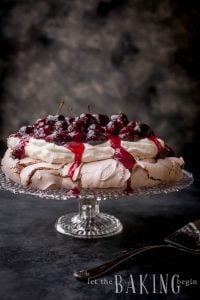
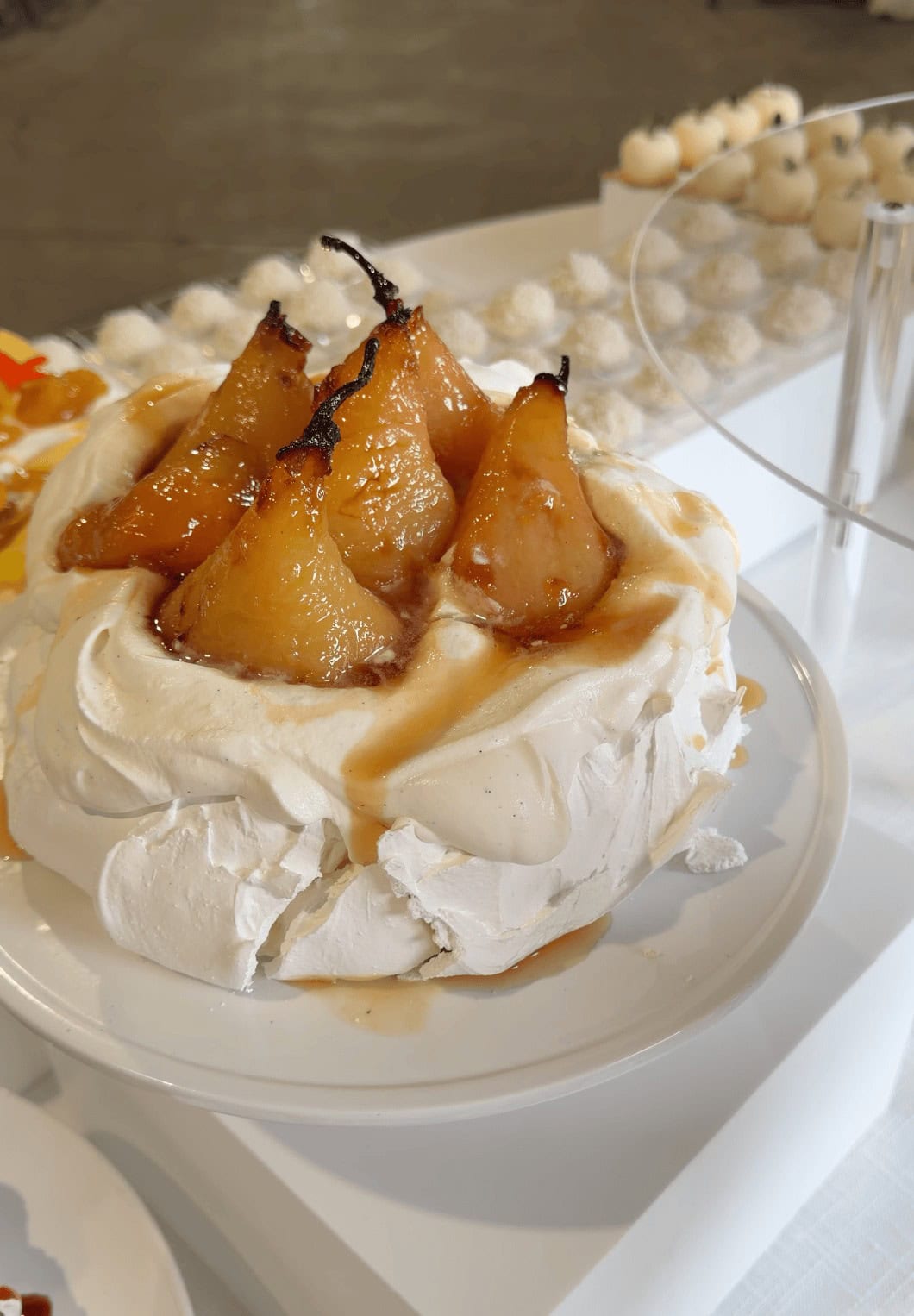
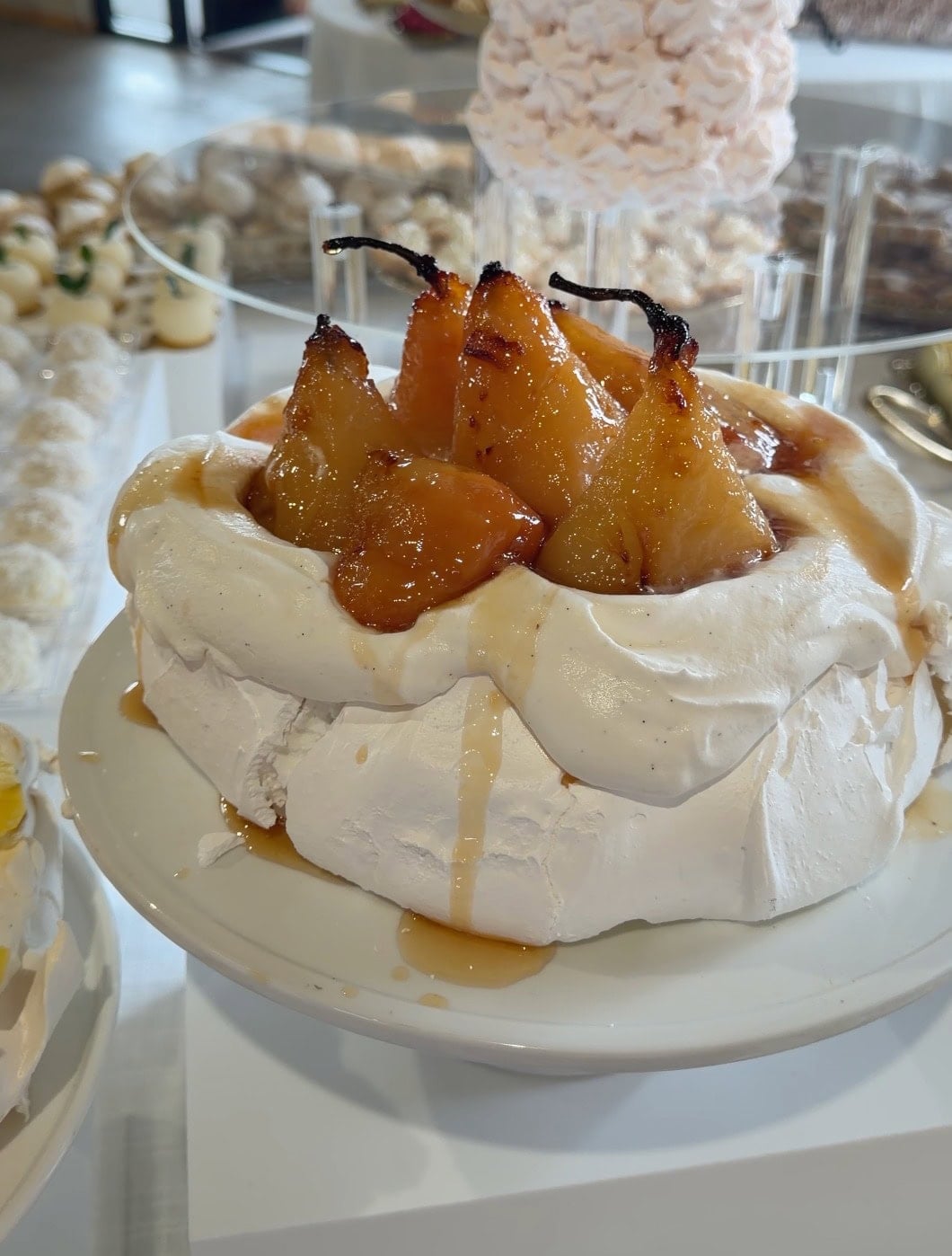
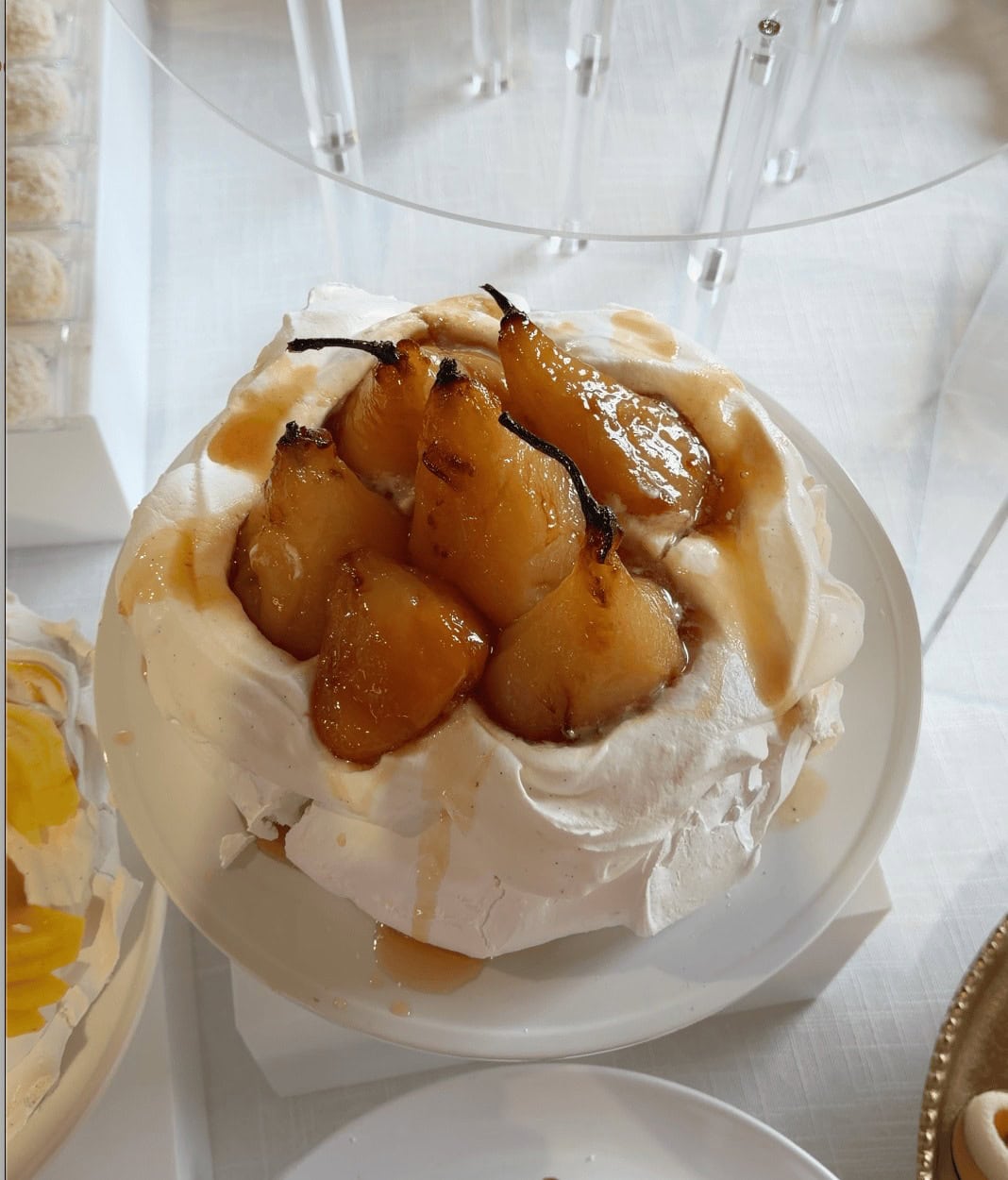
Roasted pear pavlova is a crisp pavlova meringue topped with pear compote, soft whipped cream, and whole pears roasted until they are deep amber and glossy. It looks like something out of a pastry case. The whole pears are the part people notice, and roasting them is the easiest thing here.
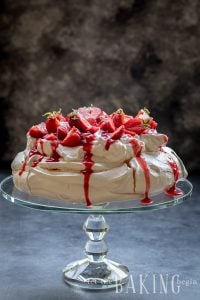
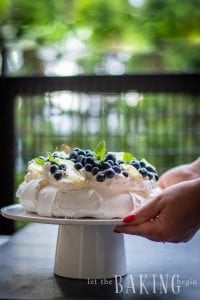
If you like this one, try my red, white and blue pavlova, the strawberry pavlova, or the lemon blueberry pavlova cake.
Here is why you will love this Roasted Pear Pavlova
Roasted pears bring caramel to a pavlova meringue, and that is what this dessert is built around.
- It tastes like caramel – the sugar on the pears darkens while they roast, and that caramel runs down through the cream into the meringue.
- Contrast in flavors and textures – a crackly shell, a marshmallow middle, cold cream, and a warm soft pear all land in the same spoonful, and it is amazing.
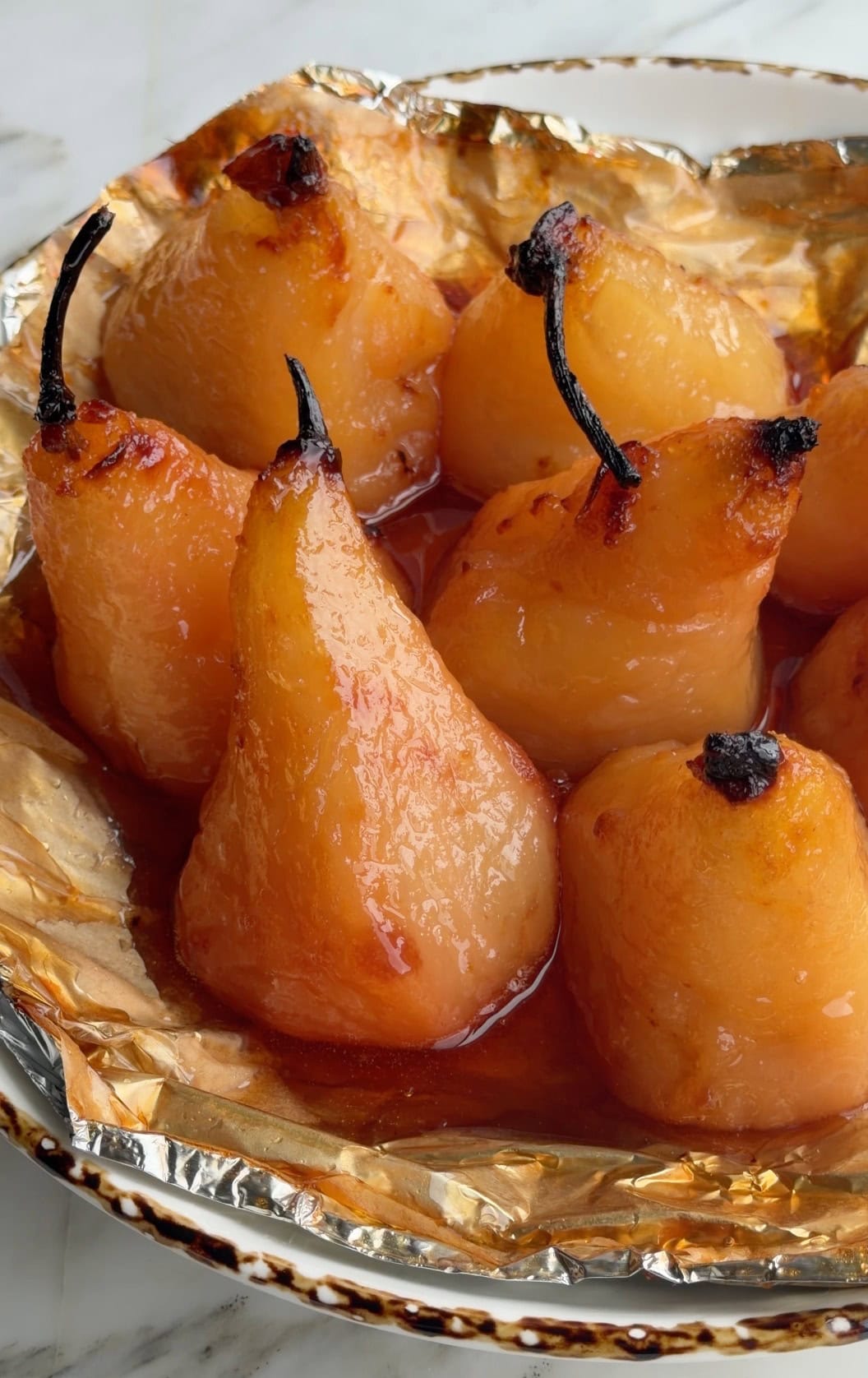
- Looks stunning – whole roasted pears with the stems still on look like real pastry work, and all you did was turn them in the pan.
- Pear in every bite – there is a layer of pear compote under the cream, so every slice tastes like pear, not just the piece with a whole pear on it.
- Each component is make-ahead – the pavlova meringue, the pear compote, and the roasted pears all keep overnight, so the only job left on the day is whipping the pavlova cream.
What Is Roasted Pear Pavlova?
Pavlova is a meringue dessert named after Anna Pavlova, the Russian ballerina. The outside bakes into a thin crisp shell and the middle stays soft, closer to marshmallow than to a cookie.
This version trades the usual berries for pears in two forms. A thick pear compote goes down first, and whole pears roasted in sugar sit on top with their caramel poured over. If roasted fruit is your thing, my baked pears use the same idea in a smaller dessert.
Where This Roasted Pear Pavlova Came From
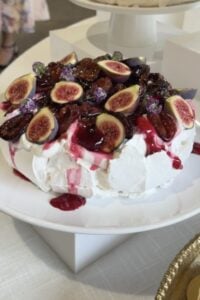
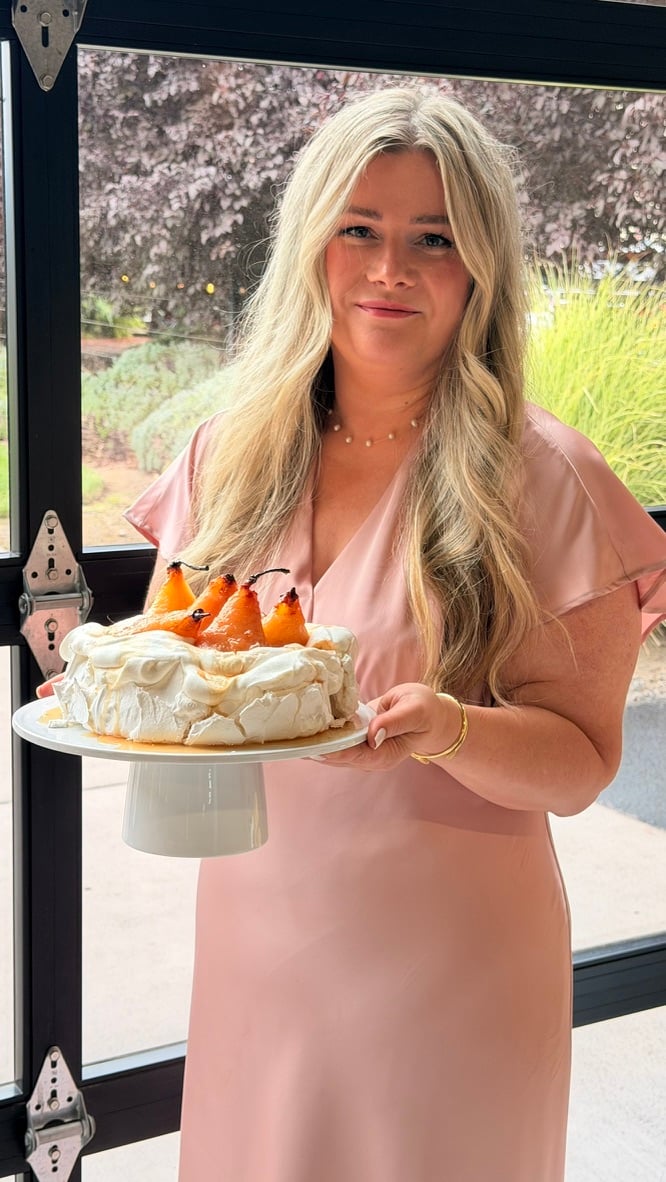
My cousin asked me to do the dessert table for her wedding. I made three pavlovas for it – this pear one, a roasted plum pavlova, and a mango and passion fruit one – and set them out side by side.
Three of them together did something none of them does alone. People found me about it all night. That is the only reason this post exists: enough of them asked how it was done that it seemed worth writing out for anyone who wants the same thing on their own table.
Ingredients for Roasted Pear Pavlova
Four short lists, and most of it is eggs, sugar, and pears. Amounts are in the recipe card at the bottom. Here is what each one brings.
Pavlova Meringue
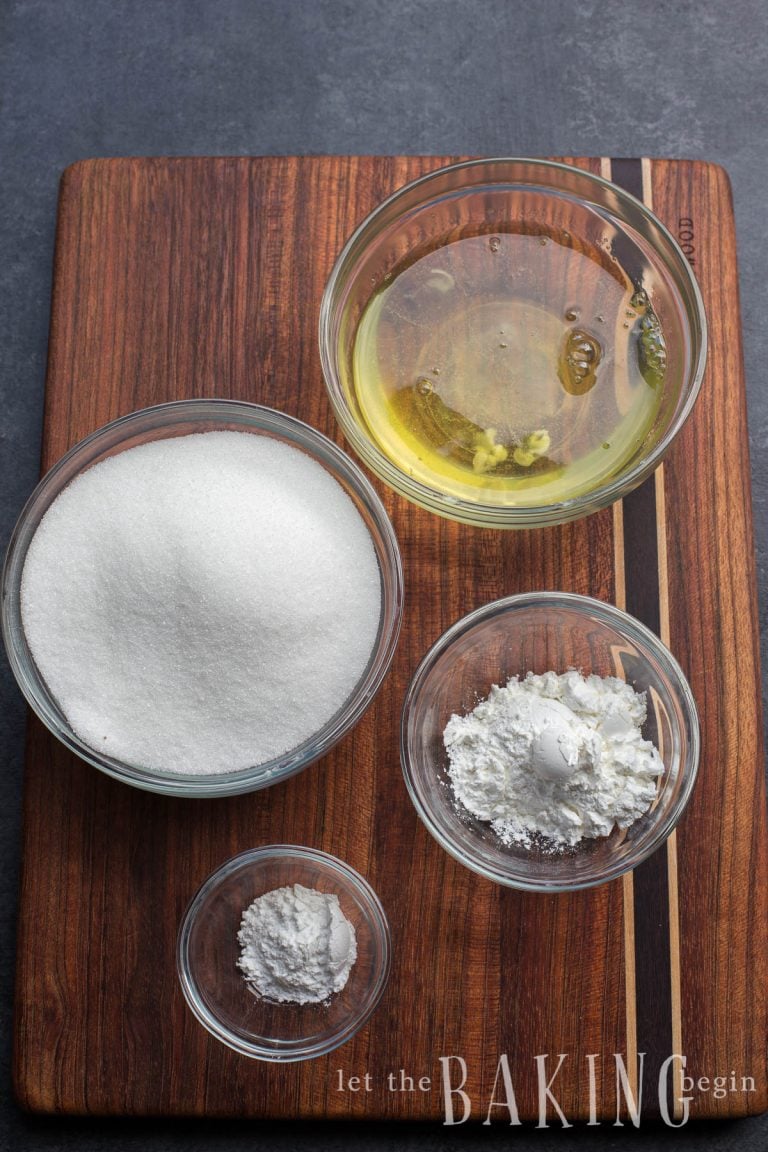
- Egg whites: whipped to stiff peaks, they hold all the air, giving the pavlova meringue both structure and volume. Room-temperature whites whip taller than cold ones.
- Granulated sugar: dissolved sugar locks the whipped egg protein in place, so the pavlova meringue holds instead of collapsing, and it gives the shell its crisp snap. Superfine dissolves fastest.
- Cornstarch: it holds moisture in the center, so the middle of the pavlova meringue stays soft and marshmallowy while the shell bakes crisp. Potato starch works in its place.
- Cream of tartar: a little acid helps the egg whites hold onto the air you beat in and keeps them from deflating in the oven. White vinegar or a squeeze of lemon juice do the same job.
Pear Compote
- Pears: firm Bosc or Anjou hold their shape through the boil instead of breaking down to sauce. Cut them small so they cook through in one go; canned pears work if you drain them well.
- Lemon juice: the acid keeps the cut pears from browning and lifts the flavor that all that sugar would otherwise flatten. Bottled is fine here.
- Cornstarch: it only thickens once the pear compote reaches a full boil, and it sets firmer as it cools, so the compote stays a layer under the cream instead of running into the pavlova meringue. It takes more than the meringue does, because it has to set that firm.
Roasted Pears
- Whole pears: firm Bosc or Anjou again, stems left on. A ripe pear has already broken down its own pectin, so it collapses long before the sugar has a chance to caramelize.
- Sugar for sprinkling: it melts, mixes with the juice the pears give up, and cooks down into the caramel that bastes them. Go over them in passes rather than all at once, so it caramelizes instead of scorching.
- Fall spices (optional): cinnamon is the easy one. Cardamom, ground ginger, nutmeg, or a star anise pod tossed into the pan all work with pears. Stir the ground spices into the sugar before you sprinkle it, so they melt into the caramel instead of sitting on top of the pears.
- Water: caramel turns bitter fast once it passes deep amber. A splash of water thins it and drops the temperature, so it keeps basting instead of burning.
Pavlova Cream
- Heavy whipping cream: the fat traps the air you whip into it, so at 36% or higher the pavlova cream sets thick enough to hold up under the fruit. Anything lighter slumps.
- Vanilla extract: rounds out the cream against all that sugar. Vanilla bean paste is better if you keep it.
How to Make Roasted Pear Pavlova (Step-by-Step)
The meringue and the pears bake at different temperatures, so give yourself an afternoon and do them in this order.
How to Make the Pavlova Meringue
Start here. It bakes low and slow and then cools in the oven, so it needs the longest run-up.
- Whip the meringue. Beat the egg whites and sugar on high for 15 to 20 minutes, until the meringue is pearl white, glossy, and holds a stiff peak.

- Fold in the starch. Sift the cornstarch and cream of tartar over the top, and fold gently to keep the air in.
- Shape the pavlova meringue. Trace an 8-inch circle on parchment, flip the paper over, and spread the meringue inside the line.

- Bake it low. Put it into a 350°F oven and drop the heat to 225°F right away. Bake for 1 hour.
- Cool it in the oven. Turn the oven off, prop the door open with a wooden spoon, and leave the pavlova meringue in the oven for 30 minutes before taking it out to cool completely.


Marina’s Pro Tips for the Best Roasted Pear Pavlova

- Whip the meringue in a spotless bowl. Any grease, or one speck of yolk, stops the whites from whipping up. Wipe the bowl and whisk with vinegar or lemon first, and the meringue climbs the way it should.
- Separate the eggs cold, then let the whites warm up. Cold yolks hold together, so they are far less likely to break into the whites. But cold whites whip slowly and not as well. Pull them out about 30 minutes ahead, and they climb higher in less time.
- Whip the meringue until it balls around the whisk. Early on it splatters against the side of the bowl. Keep going, and it turns thick and glossy, and it climbs the whisk and balls up on it – that is the one to watch for. Rub a little between your fingers too: no sugar grains left means it is ready, and undissolved sugar makes a pavlova weep syrup as it bakes.
- Cool the pavlova meringue in the oven, not on the counter. A sudden temperature drop cracks the shell. Turn off the oven and prop the door open to get a pavlova meringue that comes out in one piece.
- Bake pavlova on a dry day. Sugar pulls water straight out of humid air, which is why a meringue that behaved perfectly in October turns sticky and slumps in August. Fall and winter are the easy seasons for this. On a humid day, whip longer and give it more time to dry out in the oven.
- A few cracks are normal. A pavlova is a sugar shell with air trapped in it, and it settles as it cools. Cracks are not a failed bake – the cream and pears cover them anyway.
How to Make the Pear Compote
One pot and about two minutes of real work, then it has to cool completely before it goes near the cream.
- Cook the pear compote. Stir the cubed pears, lemon juice, sugar, and cornstarch together in a saucepan and bring it to a full boil.
- Give it 60 seconds. Cook 1 minute from the full boil, stirring nonstop so the bottom does not scorch, then cool it completely.
💡 TIP: Cool the compote completely. Warm compote melts the cream and softens the meringue under it. Cold compote keeps the layers where you put them.
How to Roast the Pears
The long part. Basting them every 10 minutes helps them come out glossy instead of dry.
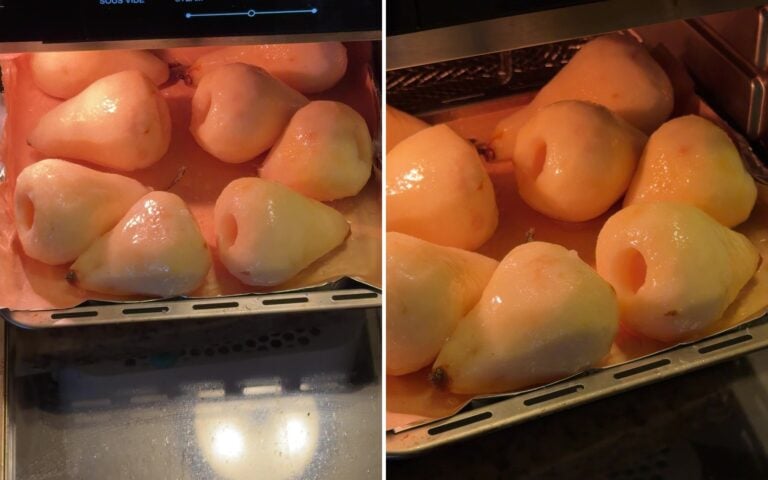
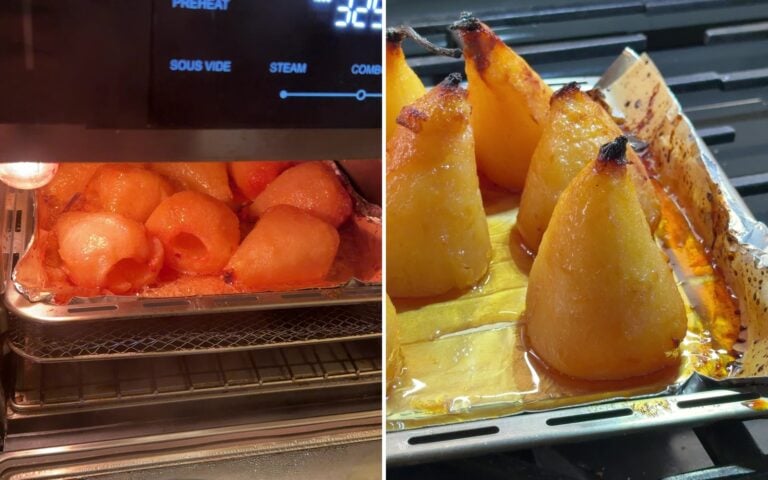
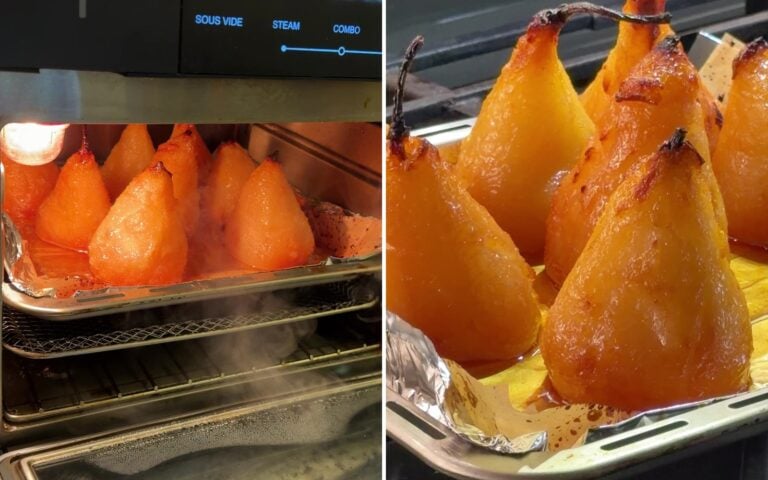
- Sugar the pears. Set the peeled, cored pears on parchment in the air fryer, sprinkle sugar over the tops only (stir your cinnamon or other fall spice into that first sugar), and roast at 325°F. Sprinkle more sugar over the tops at 20 minutes. A regular oven runs at the same temperature and for the same time.
 💡 TIP: Buy large, firm pears. Ripe pears go soft before the sugar has time to caramelize, and whole roasted pears shrink a lot as they give up their juice to the caramel. Start firmer and bigger than looks right.
 - Turn the pears at 30 minutes and sugar them again. The pears are tender by now and bruise easily, so turn each one with a soft silicone spatula rather than a metal spoon. The stems make them easier to flip, so leave them on. Sprinkle more sugar over the side that is facing up, and keep roasting.
- Baste every 10 minutes. Start once caramel syrup collects in the pan, and spoon it over the pears each time. Go by how the pears look rather than the clock – every oven runs a little hot or cold, so keep roasting until they are soft through and lightly caramelized. Mine ran about 1 hour 40 minutes at 325F from the time they went in.
- Add a splash of water. Once the caramel at the bottom starts to darken, add a tablespoon or two of water to loosen it. It keeps basting instead of burning, and that loosened caramel is the sauce you drizzle at the end.
- Stand them up and finish hot. Set the pears upright, turn the heat to 450F, and cook for 4 to 5 minutes to color the shoulders. A broiler does the same job. Watch them – this is the part that burns.
How to Whip the Pavlova Cream
Do not whip this ahead. Cream that sits starts to weep, and the meringue underneath will drink whatever it gives up.
Do this an hour before serving and chill it, so the cream sets against the pavlova meringue.
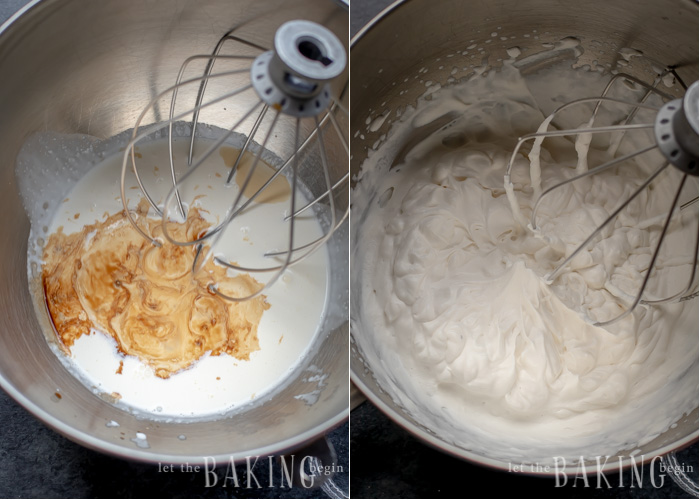
- Whip the cream. Whip the cream and vanilla for 3 to 4 minutes, to soft-medium peaks. You can whip it ahead and keep it covered and cold until you need it.
💡 TIP: Stop at soft-medium peaks. Lift the whisk, and the peak should flop over on itself rather than stand straight up. If the cream is stiff enough to slice, it has gone too far – it spreads dry and grainy over the meringue instead of settling into it. Overwhipped it? Stir in a splash of cold liquid heavy cream by hand, and it thins right back down. Do not put it back on the mixer – it will whip straight to stiff peaks again.
How to Assemble Roasted Pear Pavlova
From here it is stacking. Work from the platter up and keep the pears for last, so nothing sits on top of them.
- Anchor the pavlova meringue. Put a dab of whipped cream in the middle of your serving platter. Slide a flat cookie sheet under the pavlova meringue, lift it across, and set it down on the dab. That little bit of cream glues the shell to the plate so it stops sliding.
- Layer the pear compote. Spoon the cubed pear compote into the well, keeping it inside the borders of the pavlova meringue so it does not run down the sides.
- Top with whipped cream. Spread the remaining whipped cream over the compote.
- Set the whole roasted pears in the middle. Nest them into the center of the cream and keep them off the edges. They are caramelized and slick, and anything sitting near the rim slides off the second you move the platter. Do this right before serving.
- Drizzle the caramel and serve. Spoon the pan caramel over the pears and the cream right before it goes to the table.
💡 TIP: If the caramel sets firm once it cools, loosen it. Warm it gently, stir in a splash of water until it pours again, then let it cool before spooning it over the pavlova. Warm caramel melts the cream.
How to Make Individual Roasted Pear Pavlovas
Same meringue, different shape. For a plated dessert, pipe it into six nests about 3 1/2 inches across instead of one 8-inch disc. Pipe a solid base first, then two rings around the edge to build a wall, so each one has somewhere to hold its filling.
Start them the same way – into a 350°F oven, heat straight down to 225°F – but give them 45 minutes instead of an hour. Then turn the oven off, prop the door, and leave them in there the same 30 minutes. They are small, so they dry faster – and they crack faster if you rush the cooling.
Buy six small pears instead of five large ones. One whole pear per pavlova is the entire reason to serve them this way. Roast them exactly the same, then set one on each nest and spoon its caramel over. The compote and the cream divide between the six.
Ways to Serve Roasted Pear Pavlova
It is enough on its own for a dinner party, but a few things go well next to it.
- Toasted hazelnuts or almonds – scattered over the cream for crunch against the soft pears.
- Warm caramel – if the pan caramel ran short, a little extra never hurt anybody.
- Strong coffee – this is a sweet dessert, and it wants something bitter beside it.
How to Make Roasted Pear Pavlova Ahead
Bake the pavlova meringue up to 2 days ahead and keep it airtight. The compote and the roasted pears both keep 2 days in the fridge, with the caramel in its own jar. The pavlova cream can be whipped ahead too – keep it covered and cold in the fridge until you need it. Assemble an hour before serving and keep the pavlova in the fridge until it goes to the table.
How to Store Roasted Pear Pavlova
Room temperature: refrigerate for an hour after assembling, then it holds about 2 hours on the table before the meringue softens underneath.
Fridge: leftovers keep for 1 day, covered. The shell softens into something closer to a marshmallow cake, which is a different dessert and still a good one.
Freezer: an assembled pavlova does not freeze. The unbaked meringue does not either.
The bare pavlova meringue: airtight at room temperature for up to 2 days. Keep it away from steam and kitchen humidity, which turns a crisp shell sticky.
A few questions come up every time somebody bakes their first pavlova.
Roasted Pear Pavlova FAQ
Why did my pavlova crack?
Why is my pavlova weeping syrup?
What are the best pears for roasting?
Can I roast the pears in the oven instead of an air fryer?
Can I make it without cream of tartar?
Why did my pavlova turn beige instead of white?
More Pavlovas and Meringue Desserts to Try
- Strawberry Pavlova – the summer version, and the one to start with if this is your first meringue.
- Cherry Chocolate Pavlova – cocoa in the meringue, cherries on top.
- Lemon Blueberry Pavlova Cake – stacked into a layer cake with lemon curd.
- Red, White and Blue Pavlova – the pavlova meringue this recipe is built on.
- Meringue Cookies – the same batter, piped small.
Made this recipe?
Please leave a ⭐⭐⭐⭐⭐ star rating and a comment below.
It helps other readers find it, and I love reading every single one.
Roasted Pear Pavlova
Ingredients
Pavlova Meringue
- 6 large (210 g) egg whites
- 1 3/4 cup (350 g) granulated sugar
- 2 Tbsp (16 g) cornstarch
- 1 tsp (3 g) cream of tartar
Pear Compote
- 2 medium (300 g) Bosc pears, cubed Peeled and cored – about 2 cups
- 1 Tbsp (15 ml) lemon juice From about 1/2 lemon
- 1/4 cup (50 g) granulated sugar
- 3 Tbsp (24 g) cornstarch
Roasted Pears
- 5 (750 g) large firm pears Bosc or Anjou. Buy large – whole roasted pears shrink a lot
- 1/2 cup (100 g) granulated sugar For sprinkling
- 2 Tbsp (30 ml) water
- 1 tsp (3 g) ground cinnamon Optional. Or cardamom, ground or nutmeg
Pavlova Cream
- 1 1/2 cup (360 ml) heavy whipping cream Cold
- 1 tsp (5 ml) vanilla extract
Instructions
Bake the Pavlova Meringue
-
Whip the meringue. Beat 6 large egg whites and 1 3/4 cup granulated sugar on high for 15 to 20 minutes, until the meringue is pearl white, glossy, and holds a stiff peak. Whip until it balls around the whisk – early on it splatters against the bowl, then it turns thick and glossy and climbs the whisk in a ball. Rub a little between your fingers: if you can still feel sugar grains, keep whipping.
-
Fold in the starch. Sift 2 Tbsp cornstarch and 1 tsp cream of tartar over the meringue and fold gently. (Note 1)
-
Shape the pavlova meringue. Trace an 8-inch circle on parchment, flip the paper over, and spread the meringue inside the line.
-
Bake low. Put it into a 350°F oven and drop the heat to 225°F right away. Bake 1 hour.
-
Cool it in the oven. Turn the oven off, prop the door with a wooden spoon, and leave the pavlova meringue 30 minutes. Then cool completely on the counter. (Note 2)
Pear Compote
-
Bring it to a boil. Stir 2 medium Bosc pears, cubed, 1 Tbsp lemon juice, 1/4 cup granulated sugar and 3 Tbsp cornstarch together in a saucepan and bring to a full boil.
-
Cook 60 seconds. From the full boil, cook 1 minute, stirring nonstop so the bottom does not scorch. Cool completely.
Roasted Pears
-
Sugar and roast. Set 5 large firm pears on parchment in the air fryer, sprinkle 1/2 cup granulated sugar over the tops only, and roast at 325°F. At 20 minutes, sprinkle more sugar over the tops. A regular oven runs the same temperature and times. (See post above for photo tutorial) For a fall version, stir cinnamon or another warm spice into that first sugar (Note 8).
-
Turn the pears at 30 minutes and sugar them again. Use a soft silicone spatula rather than a metal spoon - they bruise easily by now. The stems make them easier to flip. Sprinkle more sugar over the side that is facing up, and keep roasting.
-
Baste every 10 minutes. Once caramel syrup collects in the pan, spoon it over the pears until they are deep golden, about 1 hour 40 minutes at 325°F from the time they went in. Go by how they look rather than the clock - ovens vary, so keep going until the pears are soft through and lightly caramelized.
-
Loosen the caramel. When the caramel at the bottom starts to darken, add 2 Tbsp water to the pan. This keeps it basting instead of burning, and it becomes the sauce. (Note 3)
-
Stand them up and finish hot. Set the pears upright, turn the heat up to 450°F, and give them 4 to 5 minutes to color the shoulders. A broiler does the same job. Watch them - this is the part that burns.
Whipped Cream
-
Whip the cream. Whip 1 1/2 cup heavy whipping cream and 1 tsp vanilla extract for 3 to 4 minutes, to soft-medium peaks. The peak should flop over on itself, not stand straight up - never stiff enough to slice. Overwhipped? Stir in a splash of cold liquid heavy cream by hand to thin it back down, and do not put it back on the mixer.
Assemble
-
Anchor the pavlova meringue. Put a dab of whipped cream in the middle of the serving platter. Slide a flat cookie sheet under the pavlova meringue, lift it across, and set it down on the dab. That bit of cream glues the shell to the plate.
-
Layer the pear compote. Spoon the cubed pear compote into the well, staying inside the borders of the meringue so it does not run down the sides.
-
Top with whipped cream. Spread the rest of the whipped cream over the compote.
-
Set the whole roasted pears in the middle – right before serving. Nest them into the center of the cream and keep them off the edges. They are caramelized and slick, so anything near the rim slides off the moment the platter moves. (Note 5)
-
Drizzle the caramel and serve. Spoon the pan caramel over the pears and cream right before it goes to the table.
Recipe Notes
- Fold, do not stir: the cornstarch and cream of tartar go in at the end so the meringue keeps its air. Potato starch works for the cornstarch, and lemon juice or white vinegar for the cream of tartar.
- Cooling in the oven: a sudden drop in temperature cracks the shell. The propped-door half hour keeps the pavlova meringue whole.
- The water trick: a tablespoon or two lifts the darkening caramel off the pan so it keeps basting the pears, and that loosened caramel is the sauce you pour at the table.
- Timing: assemble an hour before serving and keep it in the fridge. That hour lets the cream set against the pavlova meringue so it does not slide off as you slice.
- Add the whole roasted pears last: they are caramelized and slick, so they slide off the moment the platter moves. Assemble everything else, carry it to the table, then set the pears in the middle of the cream – off the edges – and drizzle the caramel.
- Pears: firm Bosc or Anjou. Ripe pears collapse before the sugar caramelizes. Buy large pears for roasting whole – they shrink a lot as they give up their juice to the caramel.
- Make ahead: the pavlova meringue keeps airtight 2 days, the compote and roasted pears 2 days in the fridge with the caramel in its own jar. The pavlova cream can be whipped ahead and kept covered and cold in the fridge until you need it.
- Fall spices: stir 1 tsp cinnamon (or cardamom, ground ginger, or nutmeg) into the sugar before the first sprinkle, or drop a star anise pod into the pan. Ground spice sitting on top of a pear scorches under the broiler - in the sugar it melts into the caramel.
- Whip the meringue in a spotless bowl: any grease or one speck of yolk stops the whites from whipping up. Wipe the bowl and whisk with vinegar or lemon first.
- Whip until it balls around the whisk: early on the meringue splatters against the side of the bowl. Keep going until it is thick and glossy and climbs the whisk in a ball. Rub a little between your fingers - no sugar grains left means it is ready.
- Cool the pear compote completely: warm compote melts the pavlova cream and softens the meringue under it.
- If the caramel sets firm once cold: warm it gently, stir in a splash of water until it pours again, then cool it back down before drizzling. Warm caramel melts the cream.

Thank you for following me on Instagram, Facebook & Pinterest!
Hashtag your photos #LetTheBakingBeginBlog so I can see your creations and for a chance to be featured!
Marina | Let the Baking Begin