Roasted Plum Pavlova
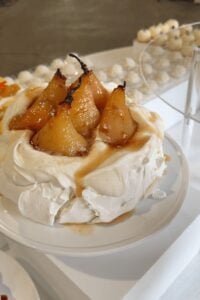
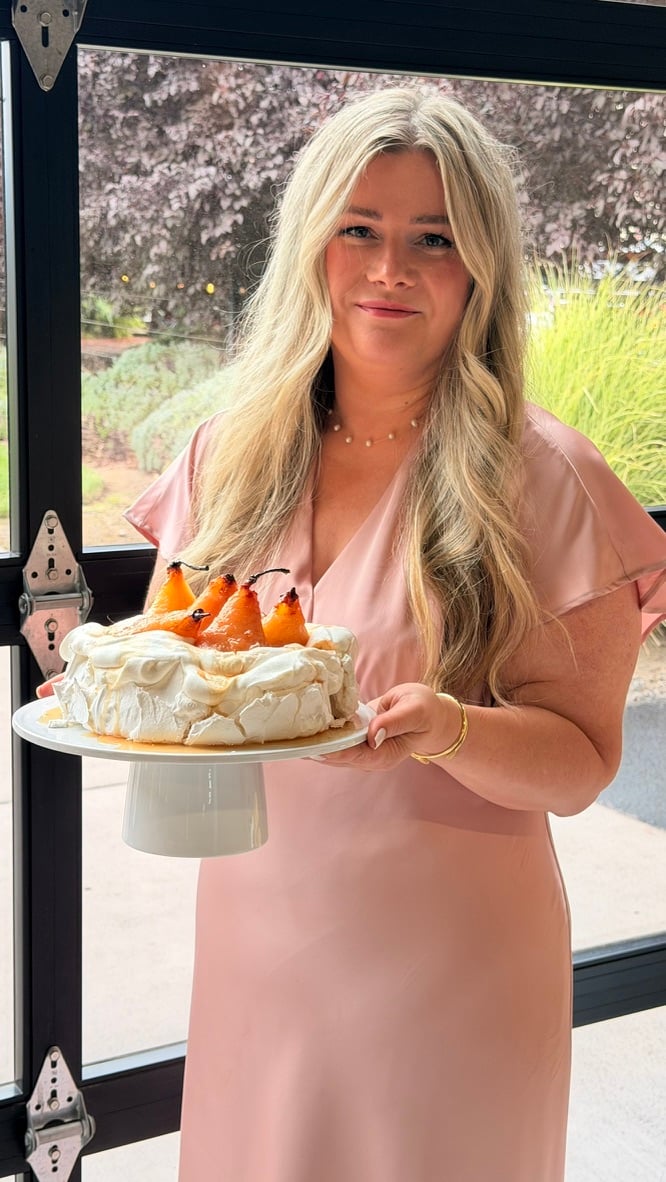
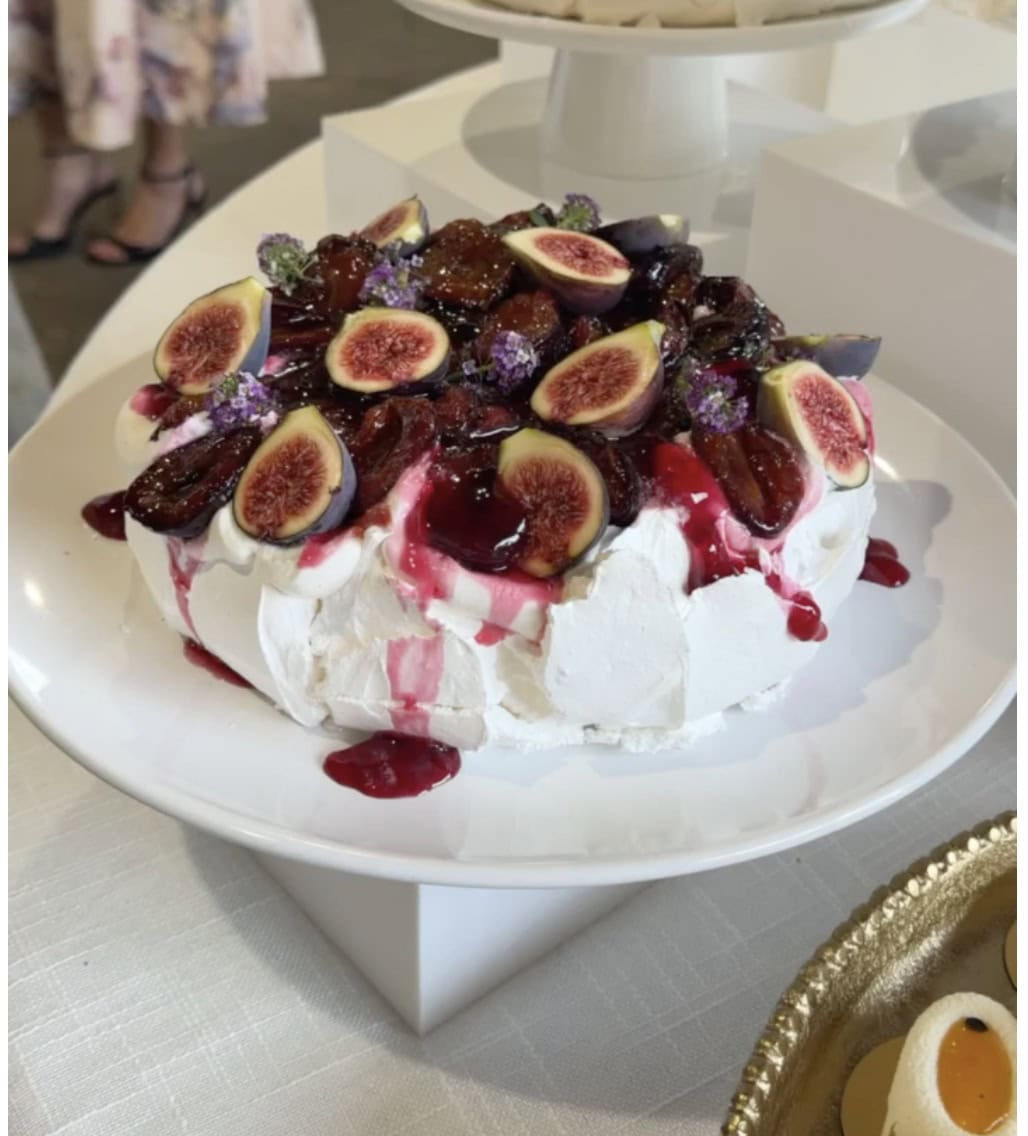
Roasted plum pavlova is a crisp pavlova meringue under soft whipped cream, piled with plum halves roasted until the tops caramelize and finished with their own reduced syrup. The plums come out of the oven looking candied. Getting them to look that way is easier than it seems, and it comes down to when you pull them out.
Plum season is short, so look at my plum galette and plum crumble bars too, or the red, white and blue pavlova if it is the meringue you are after.
Here is why you will Love this Roasted Plum Pavlova
Roasting turns a plain plum into something else entirely.
- Roasted plums taste deeper than raw ones – the heat concentrates them, the skins go tart and jammy, and that sourness keeps a very sweet meringue from tiring you out.
- A ton of plums per slice – the halves lie flat, so you can cover the whole top and every piece comes out loaded.
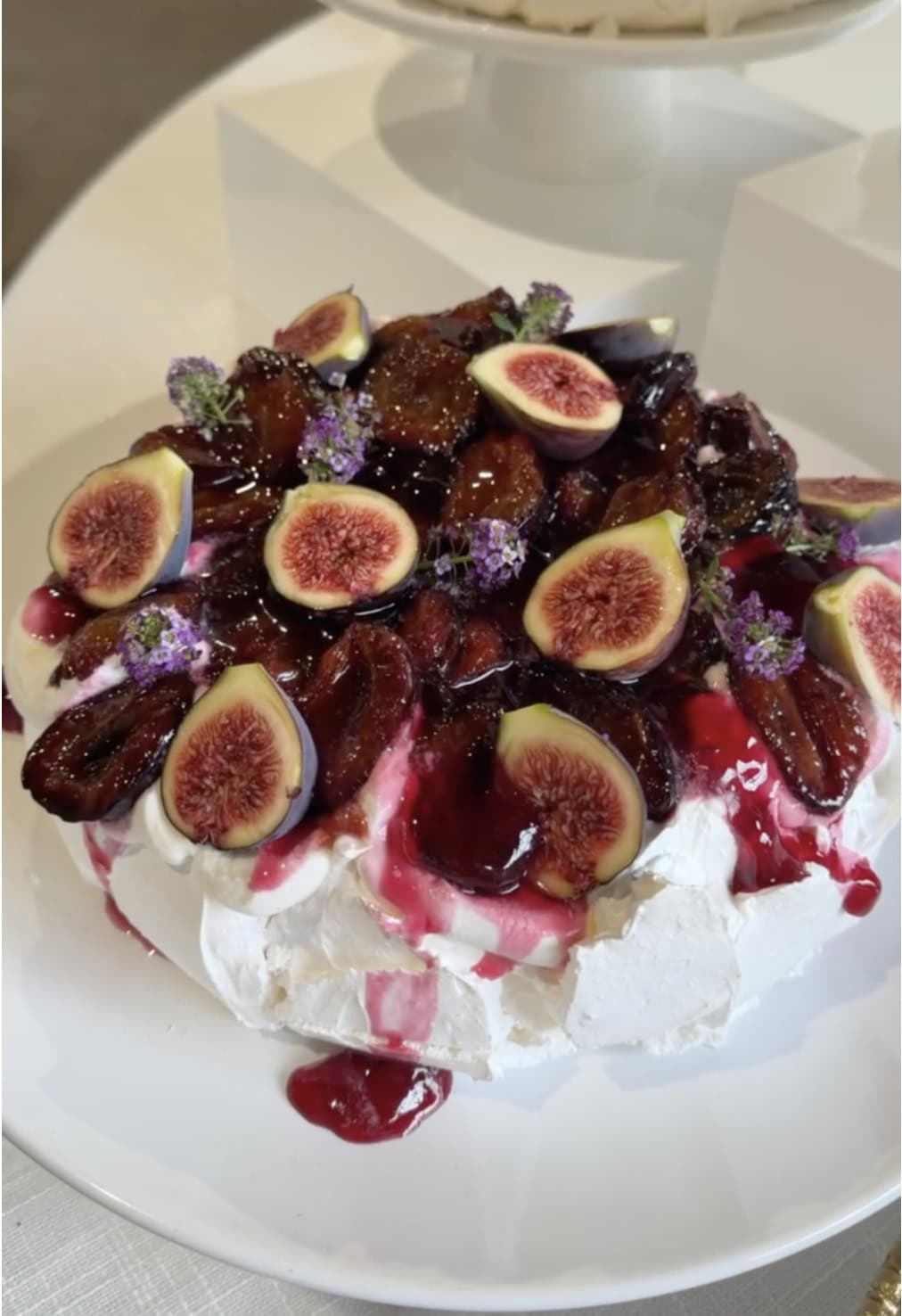
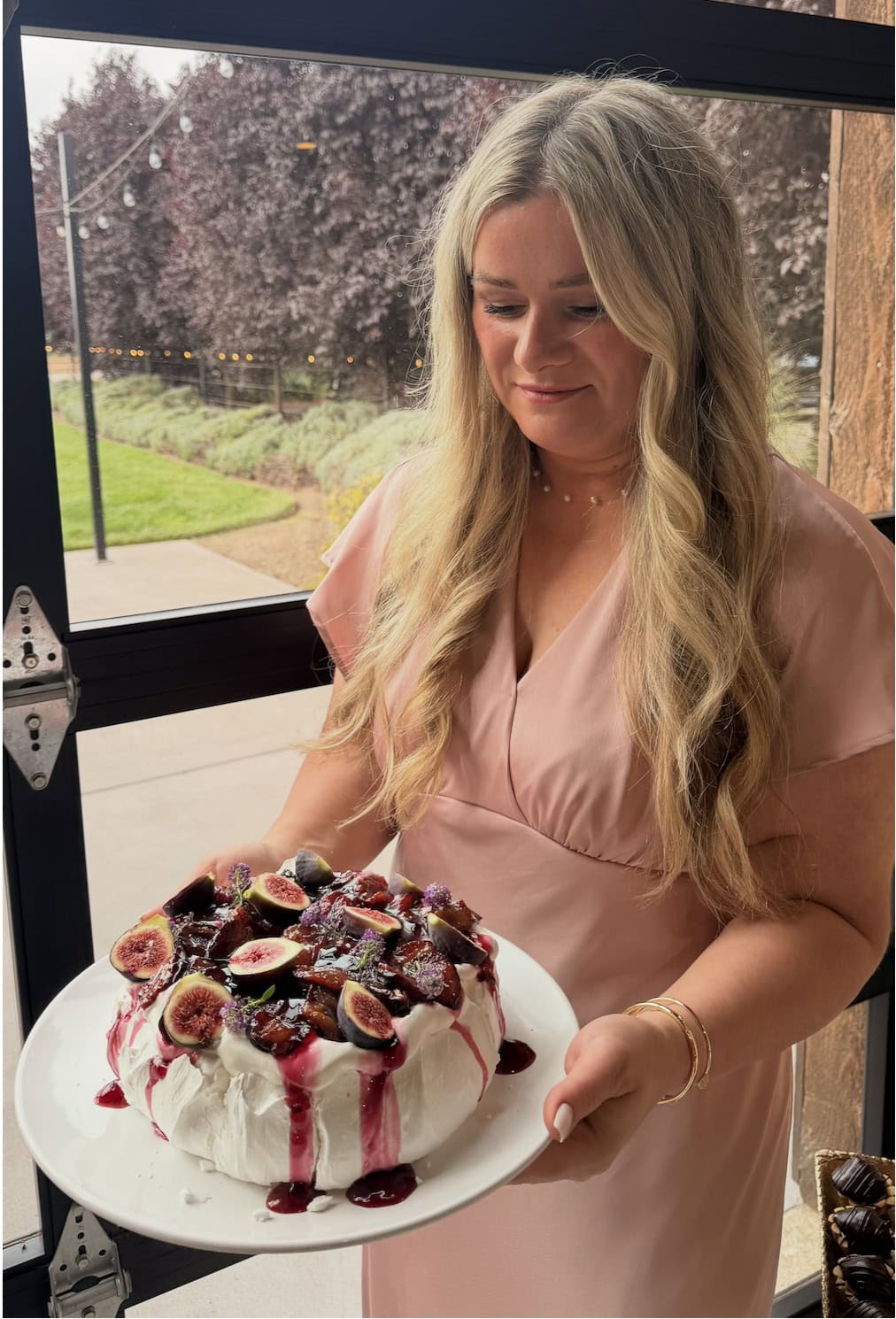
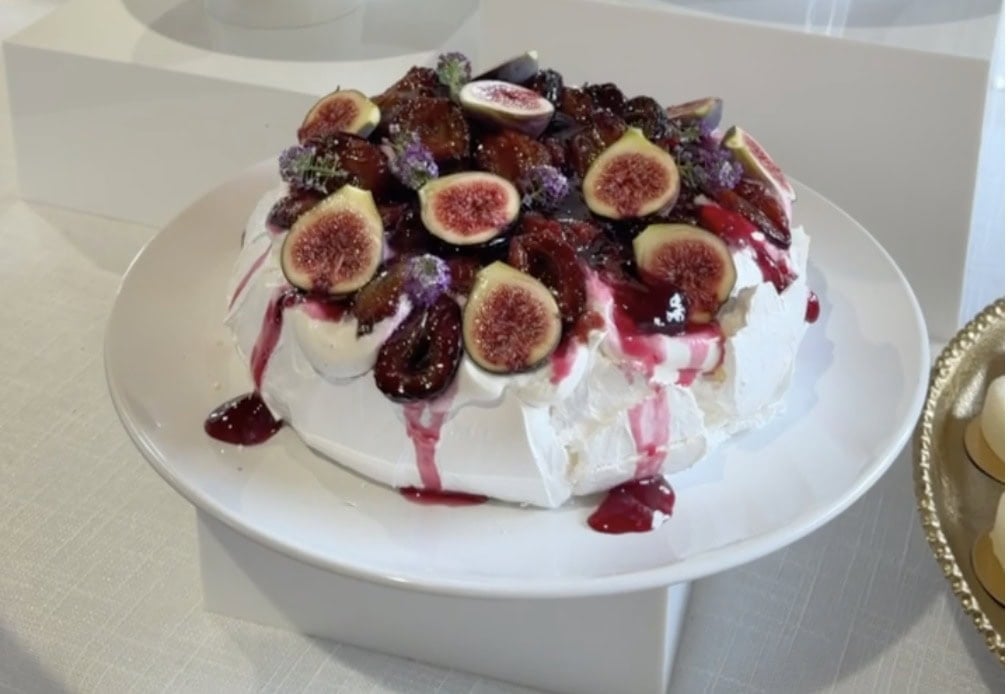
- It looks stunning – dark garnet plums against white cream, the syrup running pink where you pour it, and halved figs and a few flowers on top if you want them.
- It takes no real skill – whip, spread, roast, pile the fruit on. Nothing here needs a piping bag or a steady hand.
What Is Roasted Plum Pavlova?
Pavlova is a meringue dessert named after Anna Pavlova, the Russian ballerina. The shell bakes crisp and the middle stays soft, somewhere close to marshmallow.
Instead of fresh berries, this one gets plums roasted in sugar until the cut sides caramelize. The juice they release is reduced into a syrup and poured back over at the table.
Ingredients for Roasted Plum Pavlova
Three short lists, and one of them is just plums and sugar. Amounts are in the recipe card at the bottom. Here is what each one brings.
Pavlova Meringue
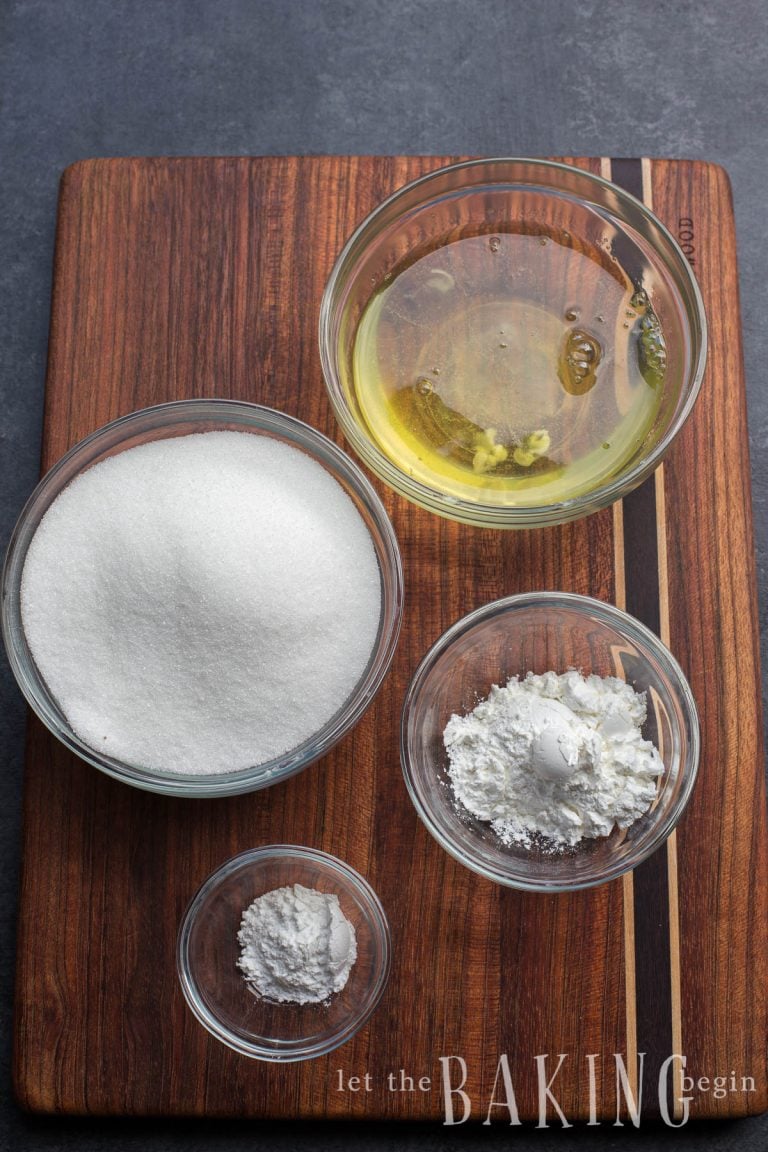
- Egg whites: whipped to stiff peaks they hold all the air, so they give the pavlova meringue both its structure and its volume. Room-temperature whites whip taller than cold ones.
- Granulated sugar: dissolved sugar locks the whipped egg protein in place, so the pavlova meringue holds instead of collapsing, and it gives the shell its crisp snap. Superfine dissolves fastest.
- Cornstarch: it holds moisture in the center, so the middle of the pavlova meringue stays soft and marshmallowy while the shell bakes crisp. Potato starch works in its place.
- Cream of tartar: a little acid helps the egg whites hold onto the air you beat in and keeps them from deflating in the oven. White vinegar or a squeeze of lemon juice do the same job.
Roasted Plums
- Plums: Italian prune plums or any freestone variety, so the pit lifts out clean. Slightly underripe is better than soft – a ripe plum has already broken down its own pectin and collapses in the oven.
- Granulated sugar: it pulls the juice out of the cut sides by osmosis, then that juice cooks down and caramelizes into the syrup. Sprinkle it in passes rather than all at once, so it browns instead of scorching.
- Almond extract: drizzled over the roasted plums in the last few minutes, so the heat pushes the almond aroma into the fruit before the alcohol flashes off. Going in earlier just bakes the scent away. Vanilla works if almond is not your thing.
Pavlova Cream
- Heavy whipping cream: the fat traps the air you whip into it, so at 36% or higher the pavlova cream sets thick enough to hold up under the fruit. Anything lighter slumps.
- Vanilla extract: rounds the cream out against the sugar. Vanilla bean paste is better if you keep it.
Decoration
- Fresh figs: decoration only, halved and tucked between the plums. Nothing about the recipe changes if you leave them off.
- Edible flowers: also just for looks. They make it read as a special-occasion dessert in photos.
How to Make Roasted Plum Pavlova (Step-by-Step)
The pavlova meringue and the plums can both be done the day before, so read the order once and plan around the cream.
How to Make the Pavlova Meringue
Start here. It bakes low and slow and then cools in the oven, so it needs the longest run-up.
- Whip the meringue. Beat the egg whites and sugar on high for 15 to 20 minutes, until the meringue is pearl white, glossy, and holds a stiff peak.

- Fold in the starch. Sift the cornstarch and cream of tartar over the top and fold gently so you keep the air in.
- Shape the pavlova meringue. Trace an 8-inch circle on parchment, flip the paper over, and spread the meringue inside the line.

- Bake it low. Put it into a 350°F oven and drop the heat to 225°F right away. Bake 1 hour.
- Cool it in the oven. Turn the oven off, prop the door with a wooden spoon, and leave the pavlova meringue 30 minutes before taking it out to cool completely.


Marina’s Pro Tips for theBest Roasted Plum Pavlova

- Whip the meringue in a spotless bowl. One speck of yolk or a film of grease keeps the whites from climbing. Wipe the bowl and whisk with vinegar or lemon and the meringue whips up the way it should.
- Whip the meringue until it balls around the whisk. Early on it splatters against the side of the bowl. Keep going and it turns thick and glossy, and it climbs the whisk and balls up on it – that is the one to watch for. Rub a little between your fingers too: no grains left means it is done, and sugar that never dissolved beads into syrup on the baked shell.
- Cool the pavlova inside the oven. Pulling it into a cool kitchen cracks the shell. Oven off, door propped, 30 minutes, and it comes out whole.
How to Roast the Plums
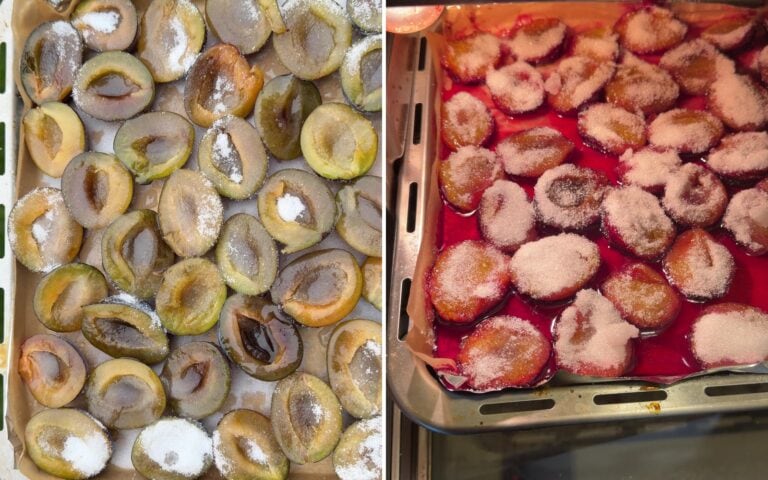
Cut side up the whole time, and the juice comes off at the 15-minute mark.
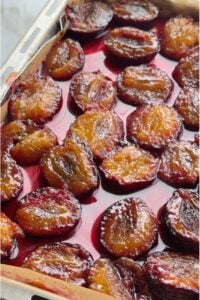
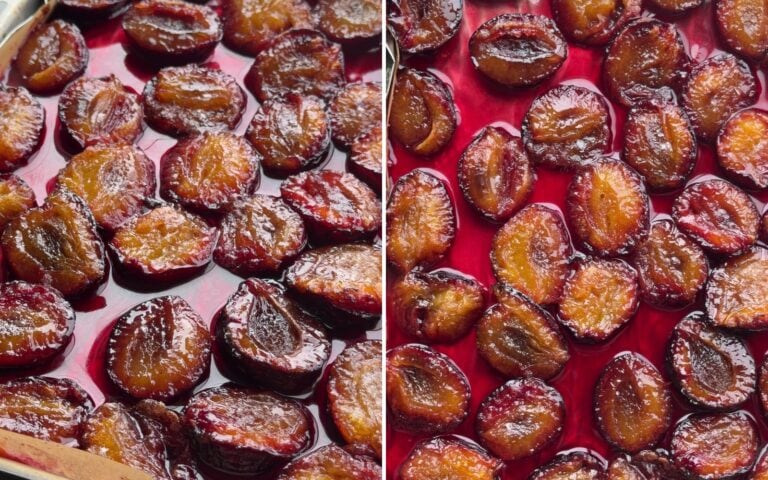
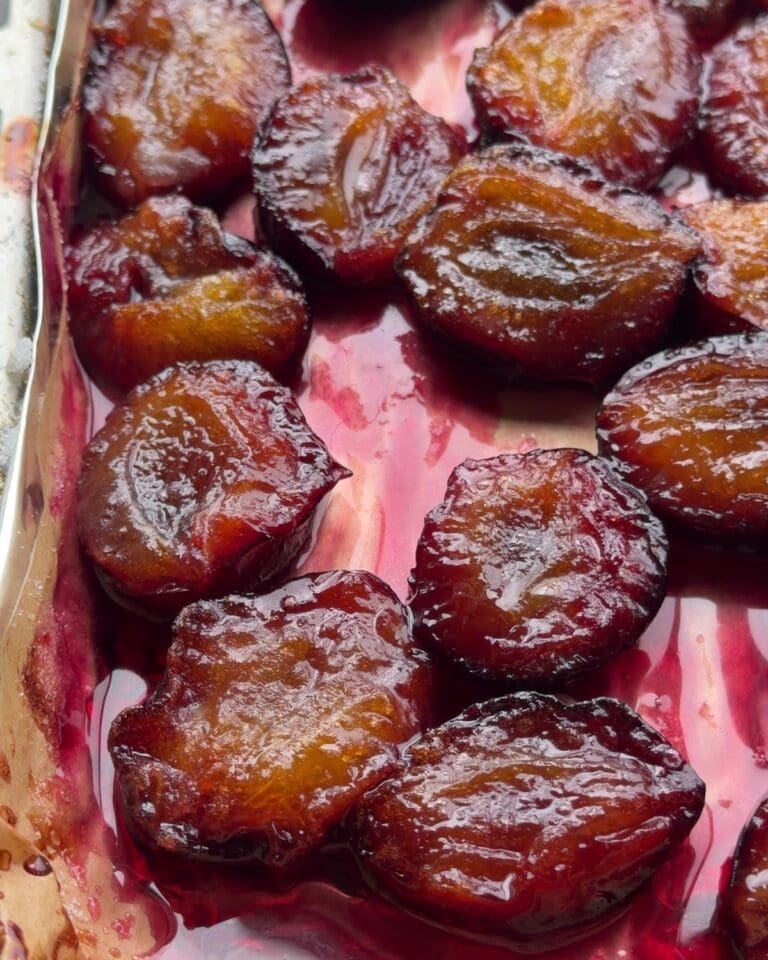
- Sugar the plums. Set the halved, pitted plums cut side up on a parchment-lined sheet, sprinkle sugar over the open halves, and roast at 325°F for 15 minutes.
 💡 TIP: Pick firm plums and roast them cut side up. Ripe plums collapse before the sugar caramelizes, and cut side down steams them in their own juice instead of browning the tops.
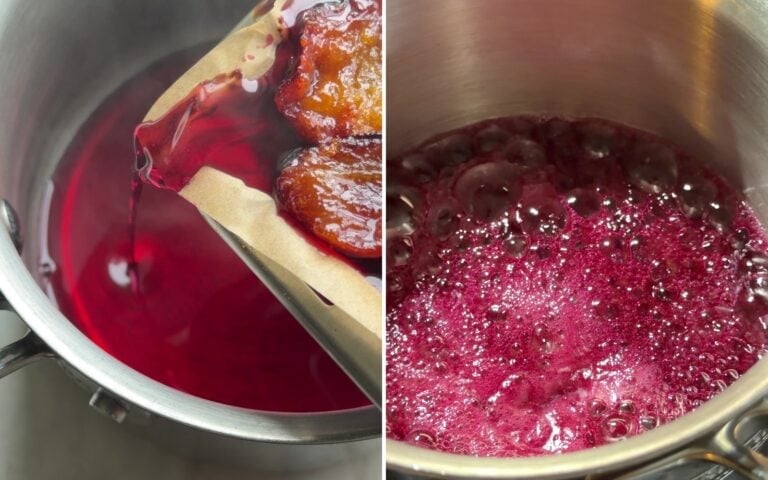
 - Drain the juice now. There is a lot of it after the first 15 minutes, and left in the pan it steams the plums instead of letting them caramelize. Pour it off into a small pan and keep it.
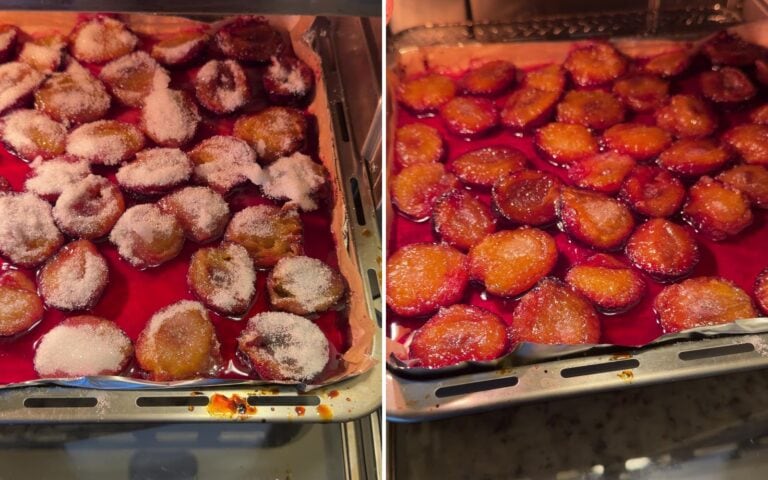
- Sugar them again. Sprinkle more sugar over the tops and keep roasting.
- Caramelize the tops. For the last 10 minutes, sprinkle lightly once more and roast until the cut sides caramelize. Go by how the plums look rather than the clock – every oven runs a little hot or cold, so keep going until they are soft and lightly caramelized. Mine took 40 minutes in total, and 5 minutes at 450F at the end will bring the color along if it is lagging.
- Drizzle on the almond extract. In the last 5 minutes, drizzle it over the roasted plums. The heat pushes it into the fruit and the whole pan smells like almond.
💡 TIP: Add the almond extract at the end, not the start. Drizzled over the plums in the last 5 minutes, the aroma stays. Added early it cooks off and you taste nothing.
How to Reduce the Plum Syrup
That drained juice becomes the glaze, so nothing gets thrown away.
- Reduce the plum syrup. Simmer that drained juice down to half its volume, until it thickens. Cool it completely, and stir in any juice the plums give up later.
💡 TIP: If the syrup sets into a jelly once it cools, loosen it. Warm it gently, stir in a splash of water until it pours again, then cool it back down before it goes over the pavlova. Warm syrup melts the cream.
How to Whip the Pavlova Cream and Assemble
Do this an hour before serving and chill it, so the cream sets against the pavlova meringue.
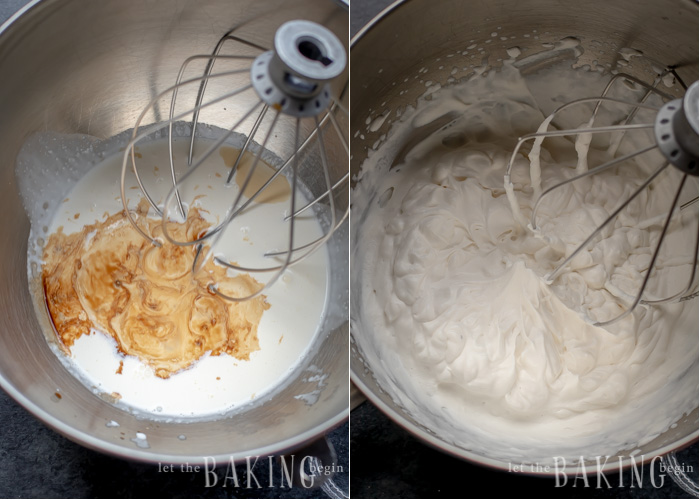
- Whip the cream. Whip the cream and vanilla for 3 to 4 minutes, to soft-medium peaks.
💡 TIP: Stop at soft-medium peaks. Lift the whisk and the peak should flop over on itself rather than stand straight up. If the cream is stiff enough to slice, it has gone too far – it spreads dry and grainy over the meringue instead of settling into it. Overwhipped it? Stir a splash of cold liquid heavy cream into it by hand and it thins right back down. Do not put it back on the mixer – it will whip straight to stiff peaks again.
- Assemble. Pavlova meringue, whipped cream, plums arranged on top, then drizzle the syrup over. Add halved figs and a few edible flowers if you want to dress it up.
Ways to Serve Roasted Plum Pavlova
A few things sit well beside it, especially if you want to stretch one pavlova further.
- Halved fresh figs – laid between the plums, they make the top look arranged without any piping.
- Toasted almonds – a handful over the cream for crunch against soft fruit.
- A spoonful of Greek yogurt – folded into the cream for a tangier, lighter layer.
How to Make Roasted Plum Pavlova Ahead
Bake the pavlova meringue up to 2 days ahead and keep it airtight. Roast the plums and reduce the syrup up to 2 days ahead as well, and refrigerate them separately. For plums on hand beyond this pavlova, my two-ingredient roasted plums keep for weeks in their syrup. The pavlova cream can be whipped ahead too – keep it covered and cold in the fridge until you need it. Assemble an hour before serving and keep the pavlova in the fridge until it goes to the table.
How to Store Roasted Plum Pavlova
Room temperature: give it an hour in the fridge after assembling, then it holds about 2 hours on the table before the meringue softens underneath.
Fridge: leftovers keep 1 day, covered. The shell turns soft and chewy, which is a different dessert and still worth eating.
Freezer: the assembled pavlova does not freeze, and neither does the baked pavlova meringue on its own.
The bare pavlova meringue: airtight at room temperature for up to 2 days, away from steam and kitchen humidity, which turns a crisp shell sticky.
These are the questions that come up most with roasted fruit on a meringue base.
Roasted Plum Pavlova FAQ
What kind of plums should I use?
Why did my plums turn watery instead of caramelized?
Why did my pavlova crack?
Why is my pavlova beading syrup on top?
Can I use frozen plums?
More Plum and Meringue Recipes to Try
- Plum Galette with Almond Cream – the free-form tart to make when you have more plums than sense.
- Plum Crumble Bars – walnut shortbread, plum filling, walnut crumble on top.
- Strawberry Pavlova – the classic version, and a good first meringue.
- Cherry Chocolate Pavlova – cocoa in the shell, cherries over the cream.
- Meringue Cookies – the same batter, piped small.
Made this recipe?
Please leave a ⭐⭐⭐⭐⭐ star rating and a comment below.
It helps other readers find it, and I love reading every single one.
Roasted Plum Pavlova
Ingredients
Pavlova Meringue
- 6 large (210 g) egg whites
- 1 3/4 cup (350 g) granulated sugar
- 2 Tbsp (16 g) cornstarch
- 1 tsp (3 g) cream of tartar
Roasted Plums
- 1 1/2 lb (680 g) plums Halved and pitted
- 1/3 cup (67 g) granulated sugar For sprinkling, in three passes
- 1/2 tsp (3 ml) almond extract Drizzled on at the end
Pavlova Cream
- 1 1/2 cup (360 ml) heavy whipping cream Cold
- 1 tsp (5 ml) vanilla extract
Decoration
- 4 (200 g) fresh figs Optional, halved, for decorating only
Instructions
Bake the Pavlova Meringue
-
Whip the meringue. Beat 6 large egg whites and 1 3/4 cup granulated sugar on high for 15 to 20 minutes, until pearl white, glossy, and holding a stiff peak. Rub a little between your fingers: if you still feel sugar grains, keep whipping.
-
Fold in the starch. Sift 2 Tbsp cornstarch and 1 tsp cream of tartar over the meringue and fold gently. (Note 1)
-
Shape the pavlova meringue. Trace an 8-inch circle on parchment, flip the paper over, and spread the meringue inside the line.
-
Bake low. Into a 350°F oven, then drop the heat to 225°F right away. Bake 1 hour.
-
Cool it in the oven. Oven off, door propped with a wooden spoon, 30 minutes. Then cool completely on the counter. (Note 2)
Roasted Plums and Syrup
-
Sugar the plums. Set 1 1/2 lb plums cut side up on a parchment-lined sheet, sprinkle part of 1/3 cup granulated sugar over the open halves, and roast at 325°F for 15 minutes. Cut side up, never face down, or they steam instead of caramelizing. (See post above for photo tutorial)
-
Drain the juice now. There is a lot of it after the first 15 minutes. Left in the pan it steams the plums instead of caramelizing them, so pour it into a small pan and keep it. (Note 3)
-
Sugar again. Sprinkle more sugar over the tops and keep roasting.
-
Caramelize the tops. For the last 10 minutes sprinkle lightly once more and roast until the cut sides caramelize, 40 minutes total. Go by how they look rather than the clock - ovens vary, so keep going until the plums are soft and lightly caramelized. 5 minutes at 450F at the end will bring the color along.
-
Drizzle on the almond extract. In the last 5 minutes, drizzle 1/2 tsp almond extract over the plums for a warm almond aroma.
-
Reduce the syrup. Simmer the drained juice it to half its volume, until thickened. Cool completely, and stir in any juice the plums release later. (Note 3)
Assemble
-
Whip the cream. Whip 1 1/2 cup heavy whipping cream, 1 tsp vanilla extract and for 3 to 4 minutes, to soft-medium peaks. The peak should flop over on itself, not stand straight up - never stiff enough to slice. Overwhipped? Stir in a splash of cold liquid heavy cream by hand to thin it back down, and do not put it back on the mixer.
-
Build it. Pavlova meringue, whipped cream, plums arranged over the top.
-
Finish. Drizzle the cooled syrup over, and add 4 fresh figs and a few edible flowers if you want it dressed up. (Note 4)
Recipe Notes
- Fold, do not stir: the cornstarch and cream of tartar go in last so the meringue keeps its air. Potato starch and lemon juice are the swaps.
- Cooling in the oven: a fast drop in temperature cracks the shell, so give it the full propped-door half hour.
- Almond extract: it goes on in the last 5 minutes only. Added earlier it cooks off. Vanilla works in its place.
- Reduce the juice: straight off the sheet it is thin and soaks into the meringue. Down to half, it clings to the fruit.
- Timing: put the plums on at the table. Their juice runs into the cream and through the shell if they sit.
- Plums: Italian prune plums or any freestone, still firm. Soft ripe plums collapse before the tops color.
- Make ahead: the pavlova meringue keeps airtight 2 days; the roasted plums and syrup keep 2 days in the fridge, stored separately. The pavlova cream can be whipped ahead and kept covered and cold in the fridge until you need it.
- Whip the meringue in a spotless bowl: any grease or one speck of yolk stops the whites from whipping up. Wipe the bowl and whisk with vinegar or lemon first.
- Whip until it balls around the whisk: early on the meringue splatters against the side of the bowl. Keep going until it is thick and glossy and climbs the whisk in a ball. Rub a little between your fingers - no sugar grains left means it is ready.
- If the syrup sets into a jelly once cold: warm it gently, stir in a splash of water until it pours again, then cool it back down before drizzling. Warm syrup melts the cream.

Thank you for following me on Instagram, Facebook & Pinterest!
Hashtag your photos #LetTheBakingBeginBlog so I can see your creations and for a chance to be featured!
Marina | Let the Baking Begin