
Beet Horseradish – Cwikla (Video)
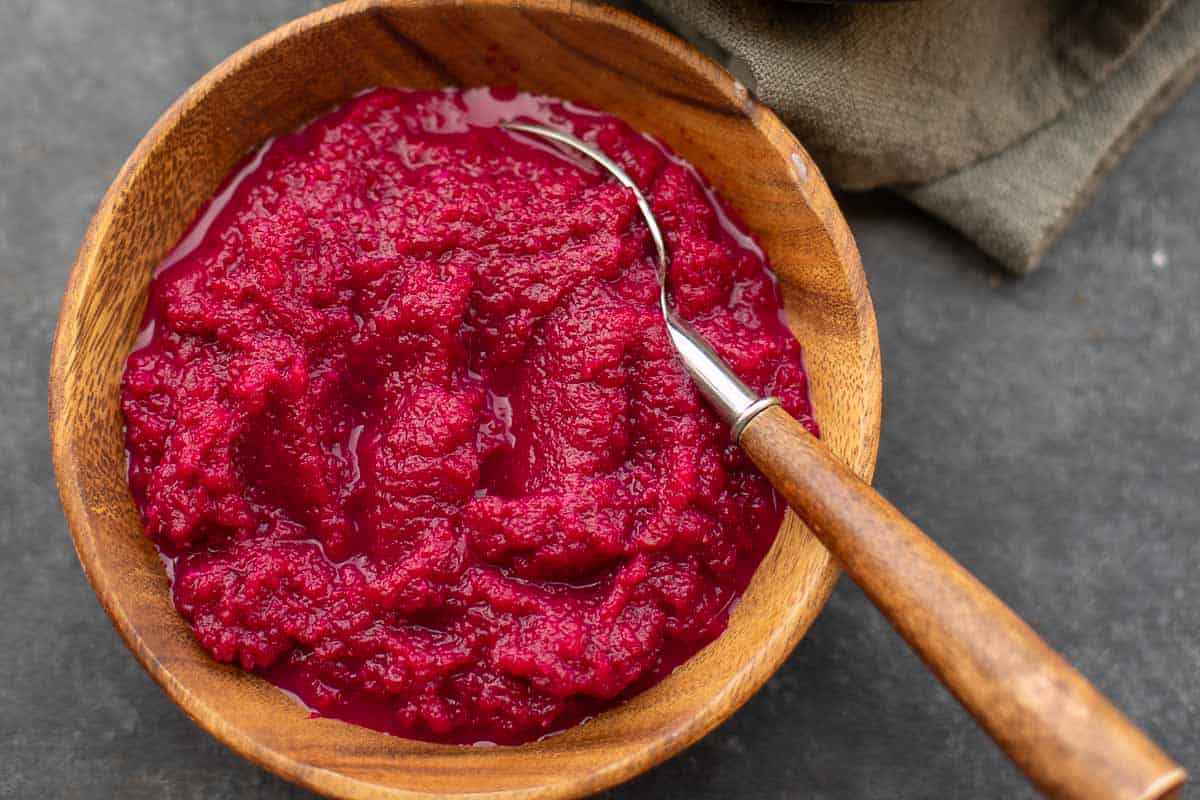
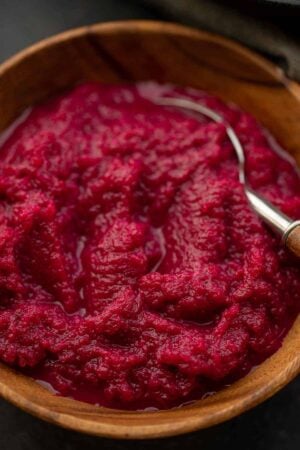
This beet horseradish is sweet, tangy and really hot. I make it with roasted beets and freshly grated horseradish root, the way we did back home. You might know it as cwikla (ćwikła) in Polish, hrin in Ukrainian or chrain on the Passover table. In a hurry? Canned beets and a jar of horseradish get you there in 10 minutes. Let me show you how.
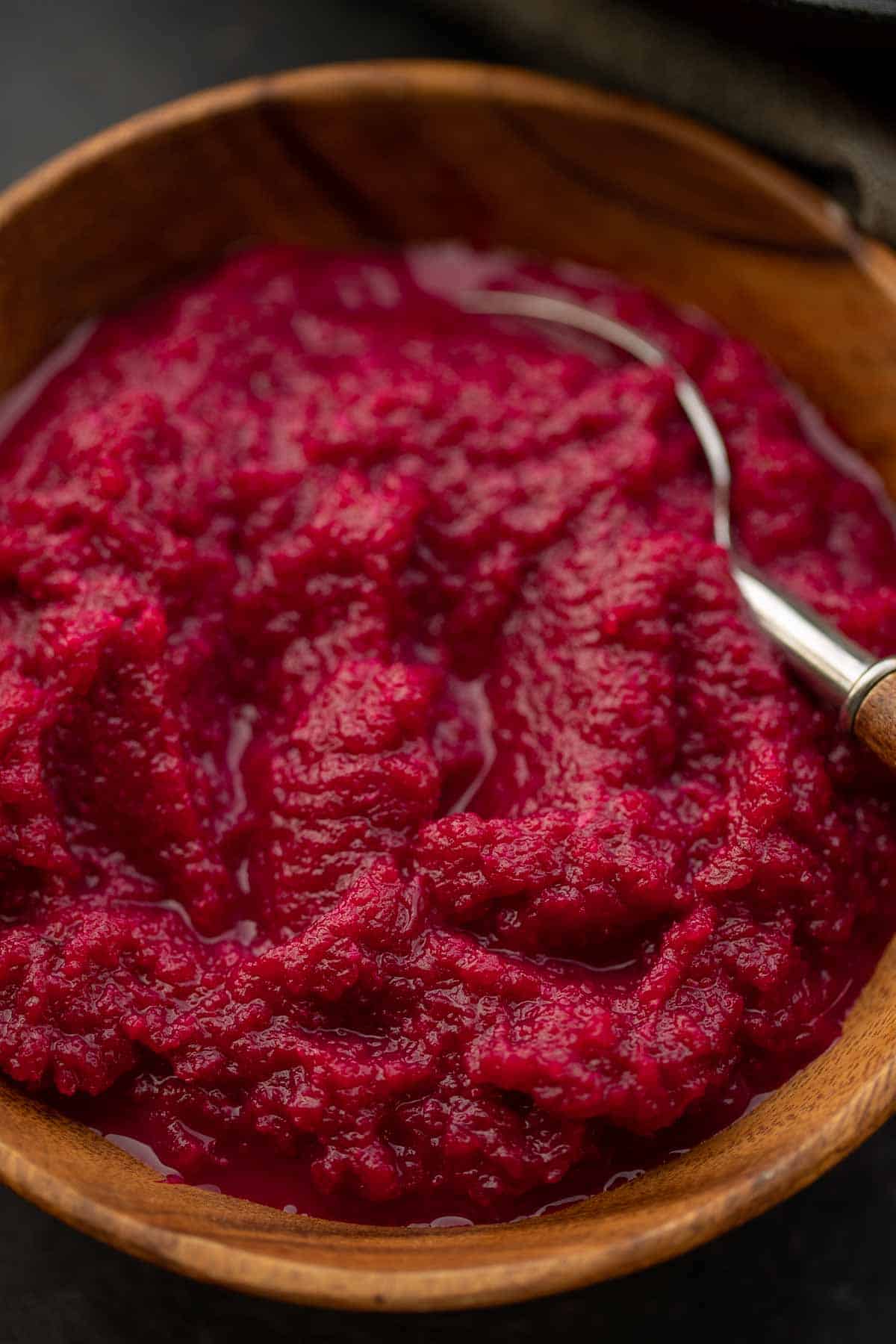
I grew up eating it with kholodets and holubtsi (stuffed cabbage rolls). A little spoonful cuts through all that rich holiday food, so we always had it on the table. Horseradish grew like a weed where I grew up. You’d go out with a shovel, dig up a root and grate it in the kitchen. These days I just grab one from the produce section. It’s usually sitting next to the ginger.
Why you’ll Love this Beet Horseradish
It’s the spoonful that makes a plate of cold cuts taste like a holiday.
- It’s delicious – sweet beets, tangy vinegar and a real horseradish kick in every bite, and it brightens anything rich you serve it with.
- It’s simple – grate, stir and chill, and you can roast the beets days ahead.
- No specialized equipment – all you need is a box grater and a bowl, so it works around what you already have.
- It’s a make-ahead condiment – it tastes even better the next day, so it’s one less thing to do on a busy holiday.
- You control the heat – add more beets for a milder relish or more horseradish if you like it fiery.
What Is Cwikla?
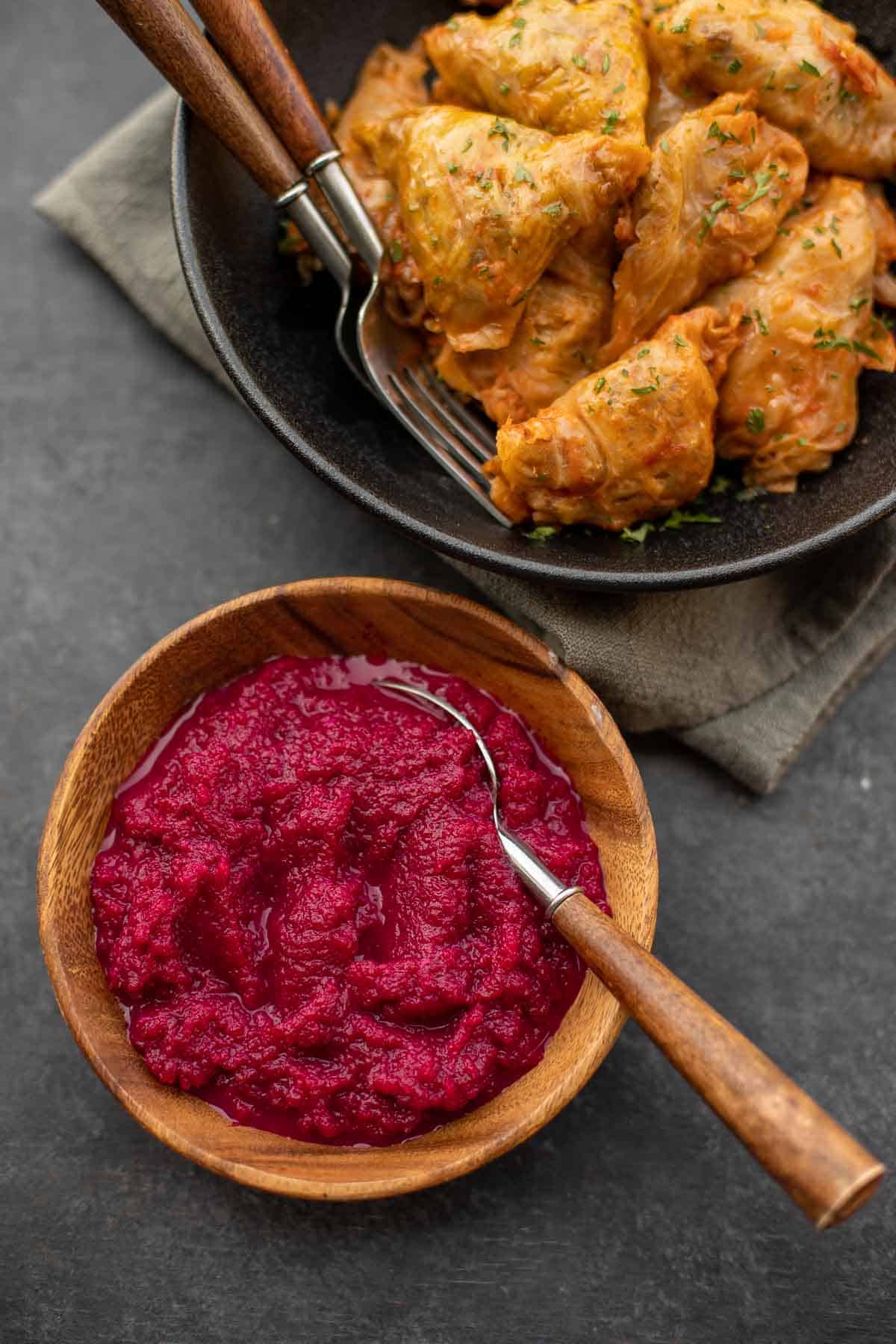
Cwikla (ćwikła) is what Poles call beet horseradish. At Easter it goes on the table with ham, kielbasa and the hard-boiled eggs from the Easter basket.
We make it in Western Ukraine too. Where I’m from, beets themselves are called tsvikli (цвіклі), so we just called this cvikli with horseradish.
Hrin – the Ukrainian Beet Horseradish I Grew Up With
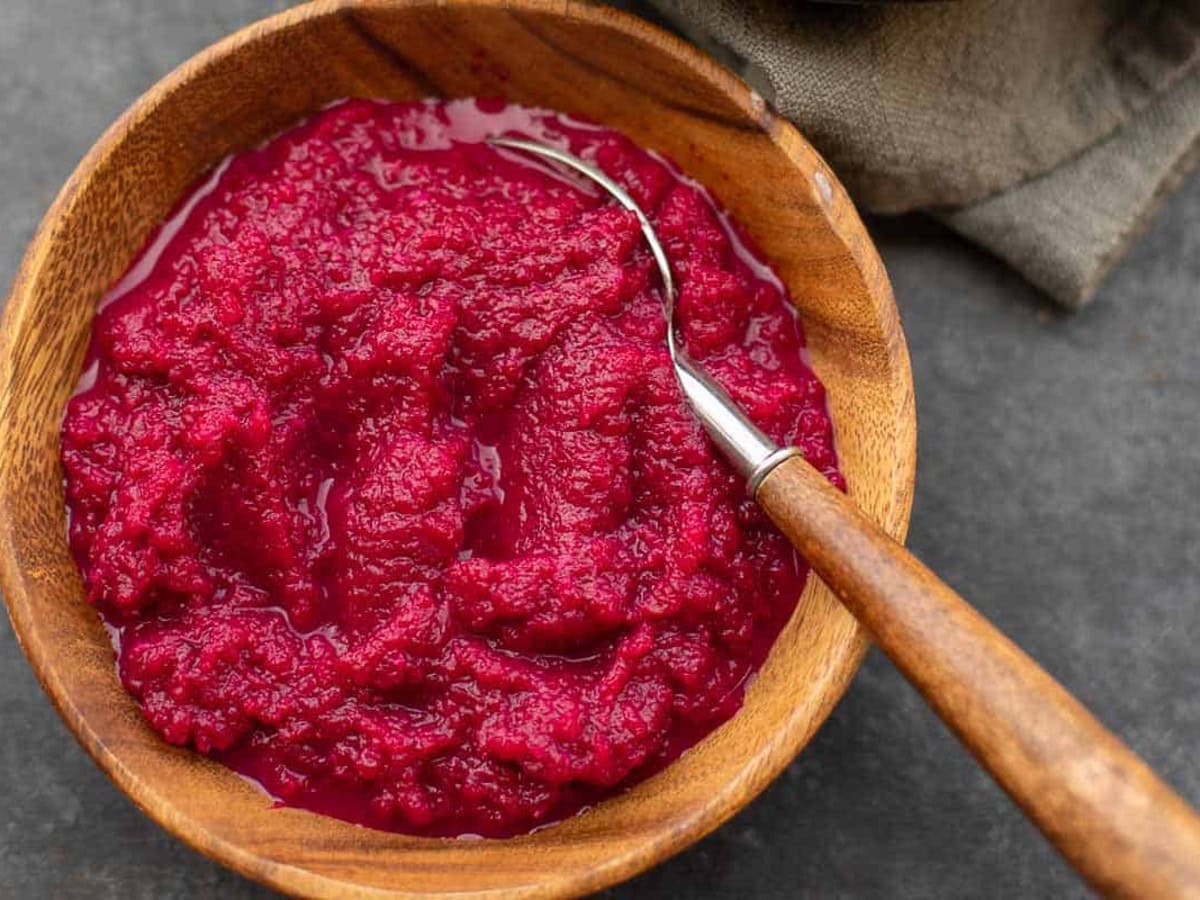
In Ukrainian it’s hrin (хрін), which simply means horseradish. In Russian it’s khren. Plain grated horseradish is fierce. Mixing it with beets makes it sweeter and milder, and gives it that deep red color.

Ingredients for Beet Horseradish (Cwikla)
You only need five ingredients. The amounts are in the recipe card below.
- Beets: Just regular red beets. I roast mine, because roasted beets are sweeter and drier and the relish comes out nice and thick. Boiled are fine too. Just don’t grab pickled beets – they already have vinegar and spices in them.
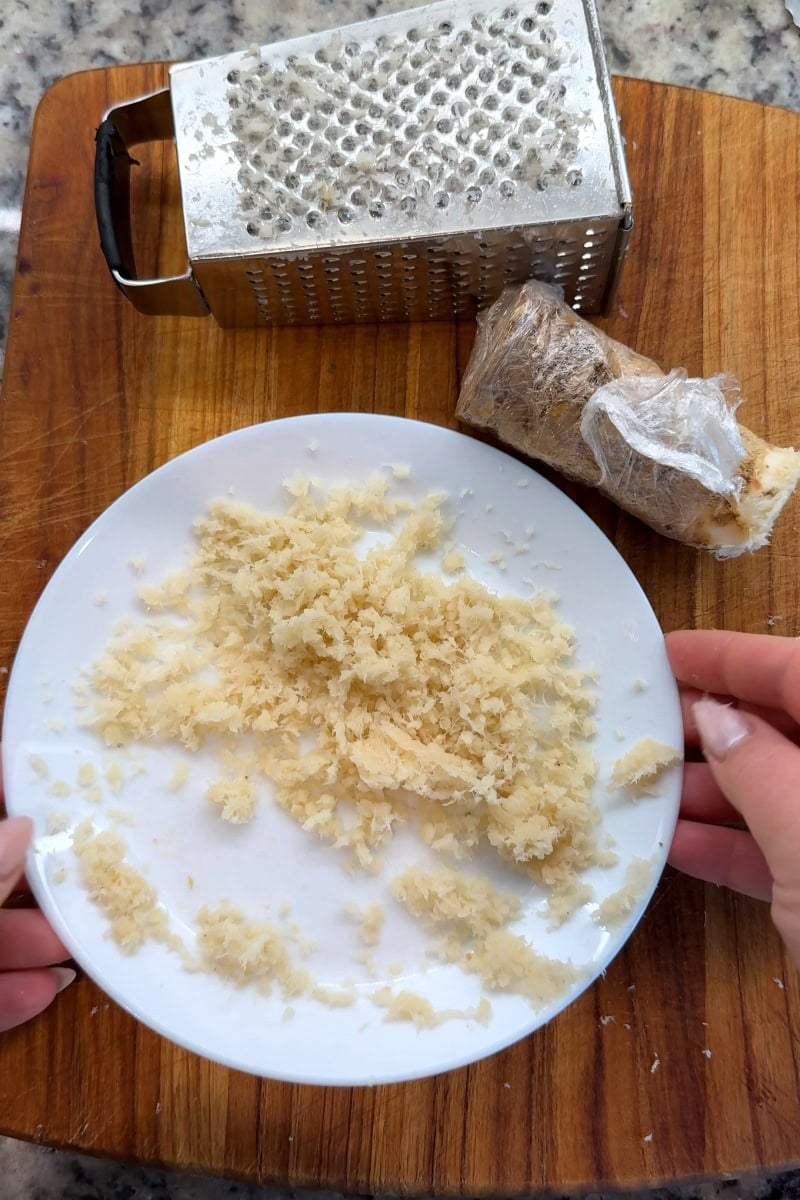
- Fresh horseradish root: Look for a firm root, no soft or green spots. If you dig it up yourself, it’ll be a lot hotter than one that’s been in the fridge for a month (so taste as you go). Can’t find the root? A jar of prepared horseradish works – see the shortcut below.
- White vinegar: It keeps that bright red color. Apple cider vinegar is fine; the color just won’t be as bright.
- Granulated sugar: I know, it looks like a lot of sugar and vinegar. But you only eat a spoonful at a time, and you need the sugar to balance the vinegar and the heat.
- Kosher salt: I use Morton. With table salt, use a little less (it’s saltier by the spoonful).
How to Cook Beets for Beet Horseradish
Scrub the beets but don’t peel them. Roast or boil them until a knife goes into the middle easily. I like roasting best – they come out sweeter. Peel them while they’re hot. Just hold them under cold water and the skins slide right off. Let them cool all the way before grating. You can do this up to 3 days ahead and keep the beets in the fridge.
| Beet size | Roast at 400°F, wrapped in foil | Boil, whole and unpeeled |
|---|---|---|
| Small (about 2 inches) | 40-50 minutes | 25-30 minutes |
| Medium (2-3 inches) | 50-60 minutes | 35-45 minutes |
| Large (over 3 inches) | 1 1/2 to 2 hours | 1 to 1 1/2 hours |
Instant Pot: Large 3-inch beets need at least 45 minutes on high pressure, then a quick release.
How to Make Beet Horseradish
For the beets, use the star side of a box grater (the little star-shaped holes). Please don’t put them in a food processor – it turns them into mush. The horseradish can go either way, grater or food processor. And fair warning, fresh horseradish is no joke. The fumes will have you in tears, so open a window or turn on the range hood before you start.
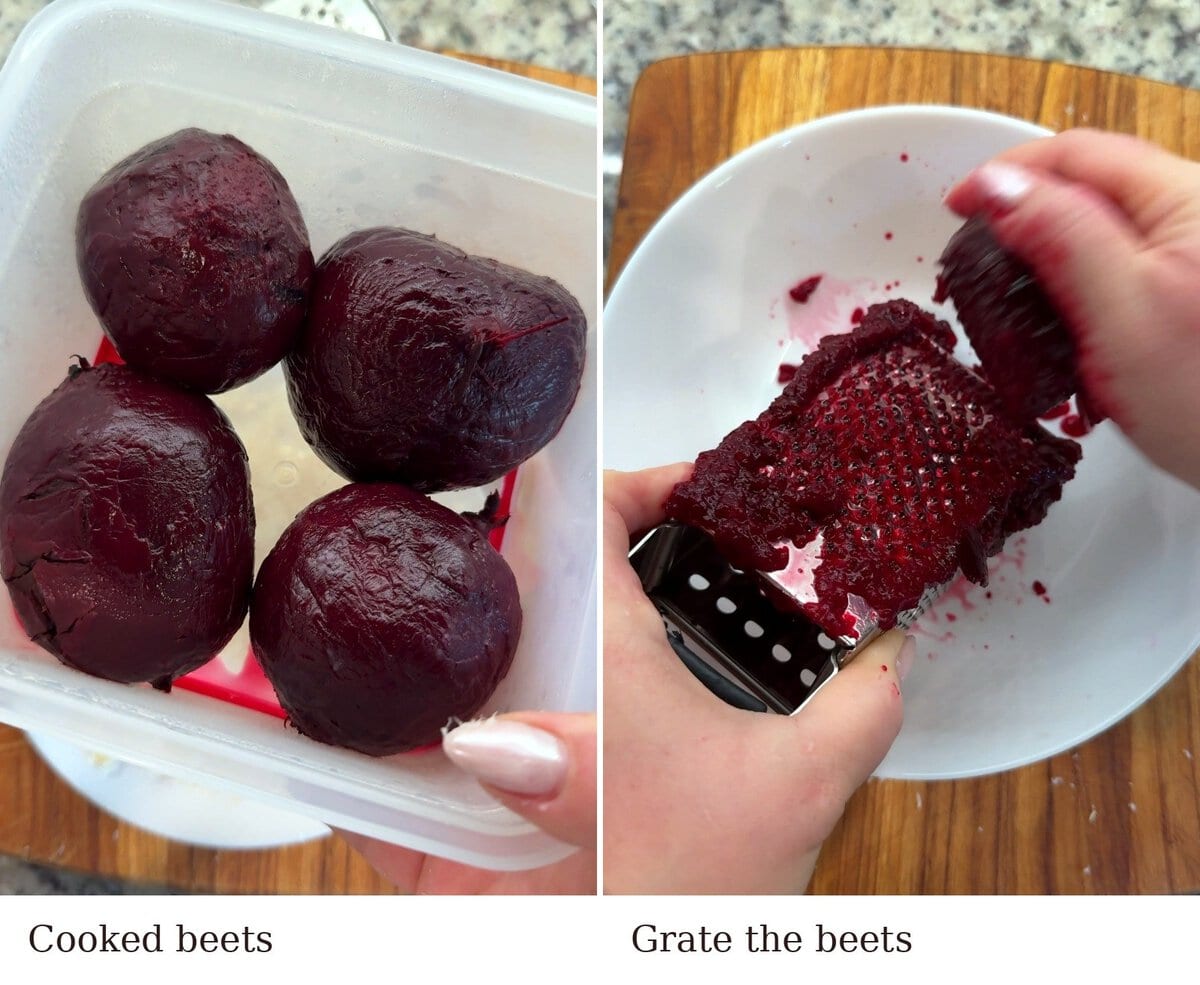
- Cook the beets – scrub them and leave the skins on. Cook until a knife slides into the center easily.
To roast: wrap each beet in foil and roast at 400°F, 50-60 minutes for medium beets.
To boil: cover them with cold water, bring to a boil and simmer, 35-45 minutes for medium beets.
In the Instant Pot: set them on the trivet with 1 cup of water and cook on high pressure, at least 45 minutes for large beets, then quick release.
Times for small and large beets are in the chart above. - Peel the beets – hold them under cold water while they’re still hot and the skins slide right off. Let them cool completely before grating.
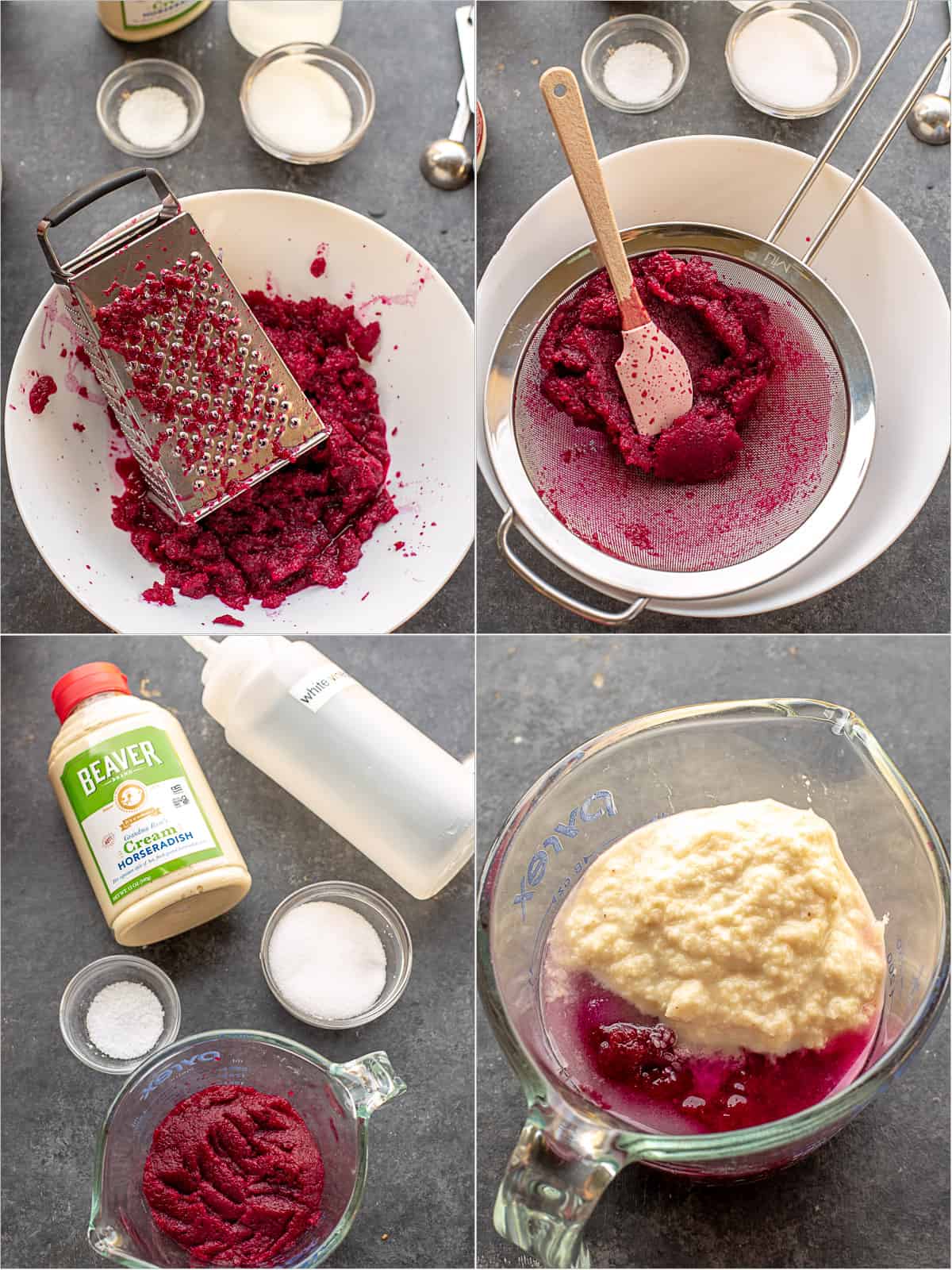
- Grate the beets – on the star side of a box grater.

- Squeeze out the juice – put the grated beets in cheesecloth (or a fine-mesh sieve) and squeeze until they stop dripping. You’ll lose more than half the weight and that’s fine. Skip this and you end up with a watery relish.
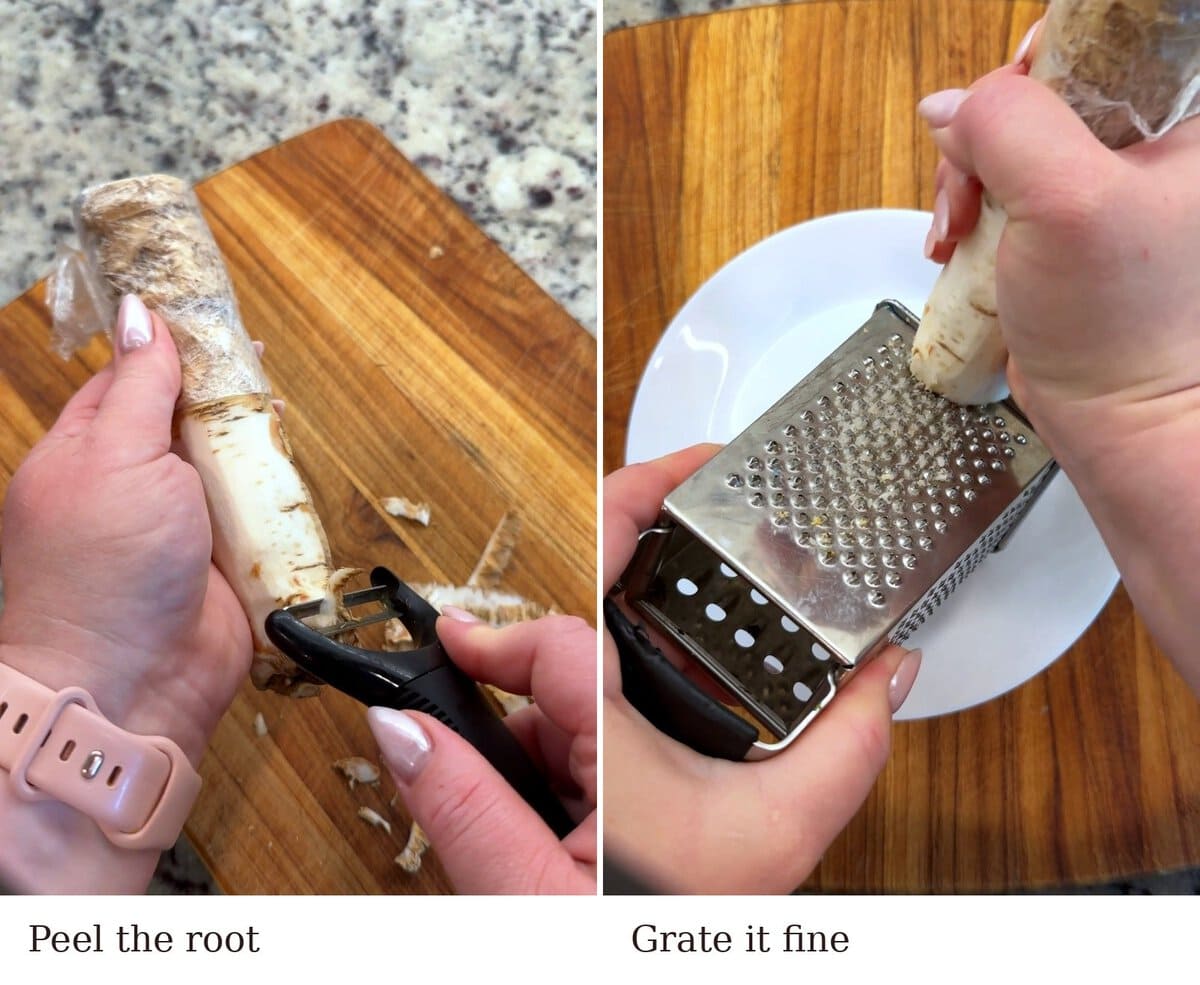
- Peel the horseradish – scrape off the brown skin with a vegetable peeler until you get to the white root.
- Grate it fine – use the star side of the box grater or a food processor. If you use the processor, switch to the S-blade after grating and run it until the horseradish is super fine. Keep your face back when you open the lid, trust me. Grate it after the beets are done, because grated horseradish starts losing its heat as soon as it hits the air.
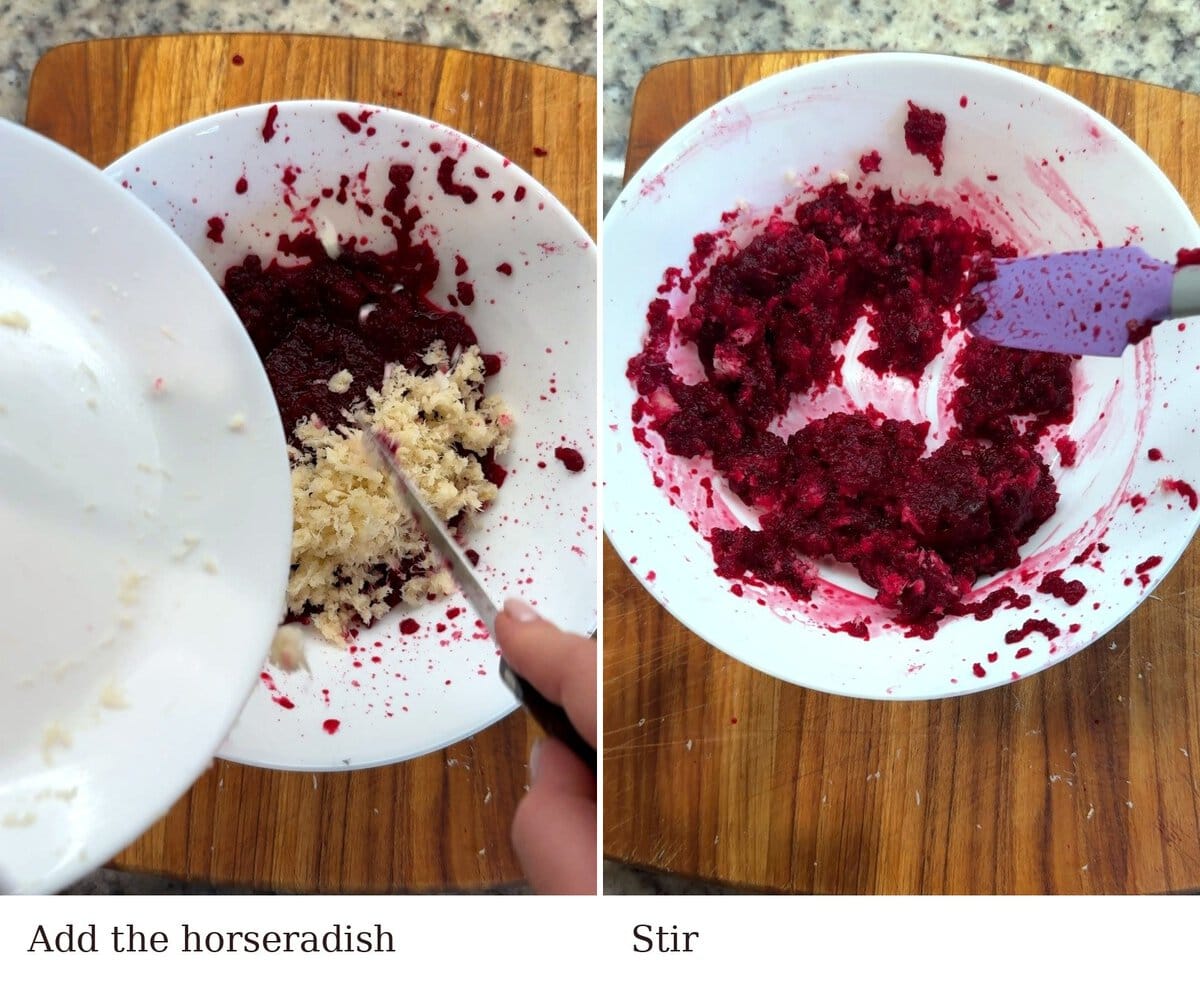
- Add the horseradish a little at a time – start with about three-quarters, stir and taste. Keep going until it’s a bit hotter than you like. It mellows within an hour and even more by the next day.
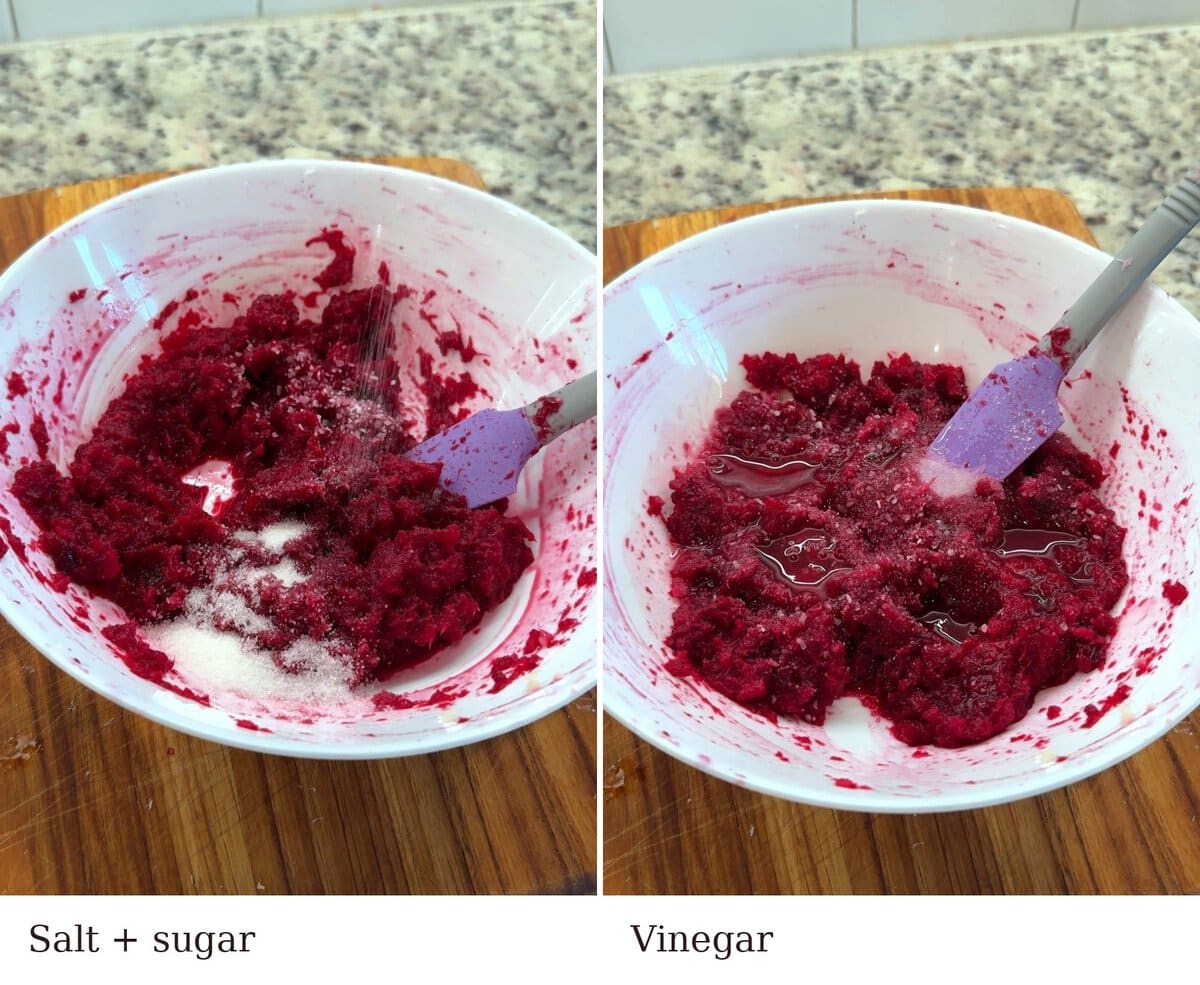
- Season – add the salt, sugar and vinegar and stir until the color is even all the way through.
- Rest, then taste – wait 5 minutes so the salt and sugar dissolve. Too sharp? Add a pinch of sugar. Tastes flat? A pinch of salt. Not hot enough? More horseradish.
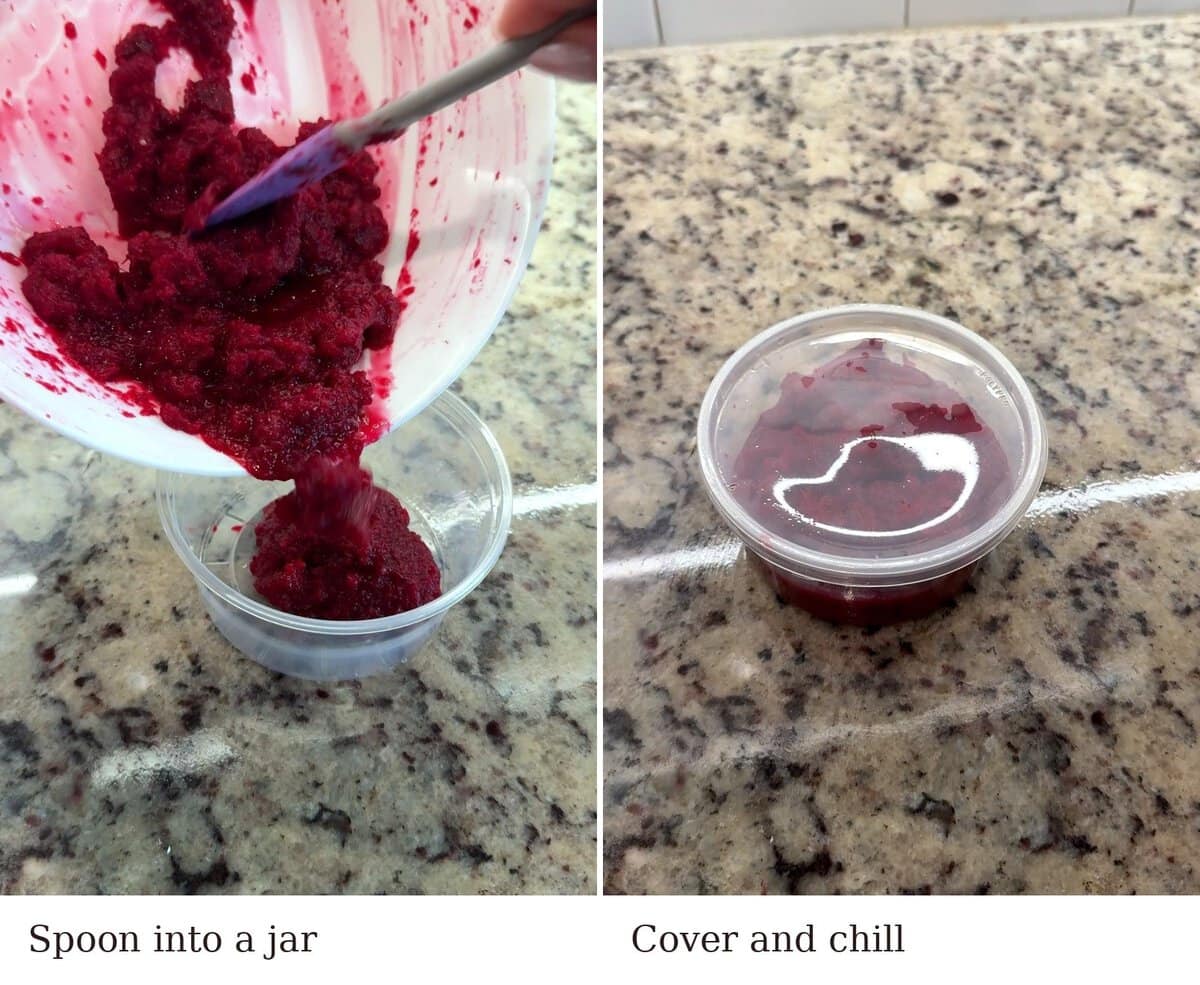
- Spoon it into a jar – pack it into a clean jar or container with a tight lid.
- Chill overnight – the flavors blend and the heat mellows a little. It’s ready to serve the next day.
Marina’s Pro Tips for theBest Beet Horseradish

- Control the heat with the vinegar – it stops grated horseradish from getting any hotter. Add it right away for a milder relish, or wait a few minutes for a hotter one.
- Make it a bit spicier than you want – by the next day it’s a lot milder.
- Grate the root right before you mix – horseradish loses heat the longer it sits out.
- Taste after it rests – right after mixing, the salt and sugar haven’t dissolved yet, so it tastes sharper than it really is.
- Loosen it with vinegar – water would thin out the flavor too.
Quick Beet Horseradish Relish
During the holidays I always keep a couple cans of cooked beets (not pickled) and a jar of extra-hot horseradish in my pantry. That way I can make this in 10 minutes whenever I need it. The swap amounts are in the recipe card.
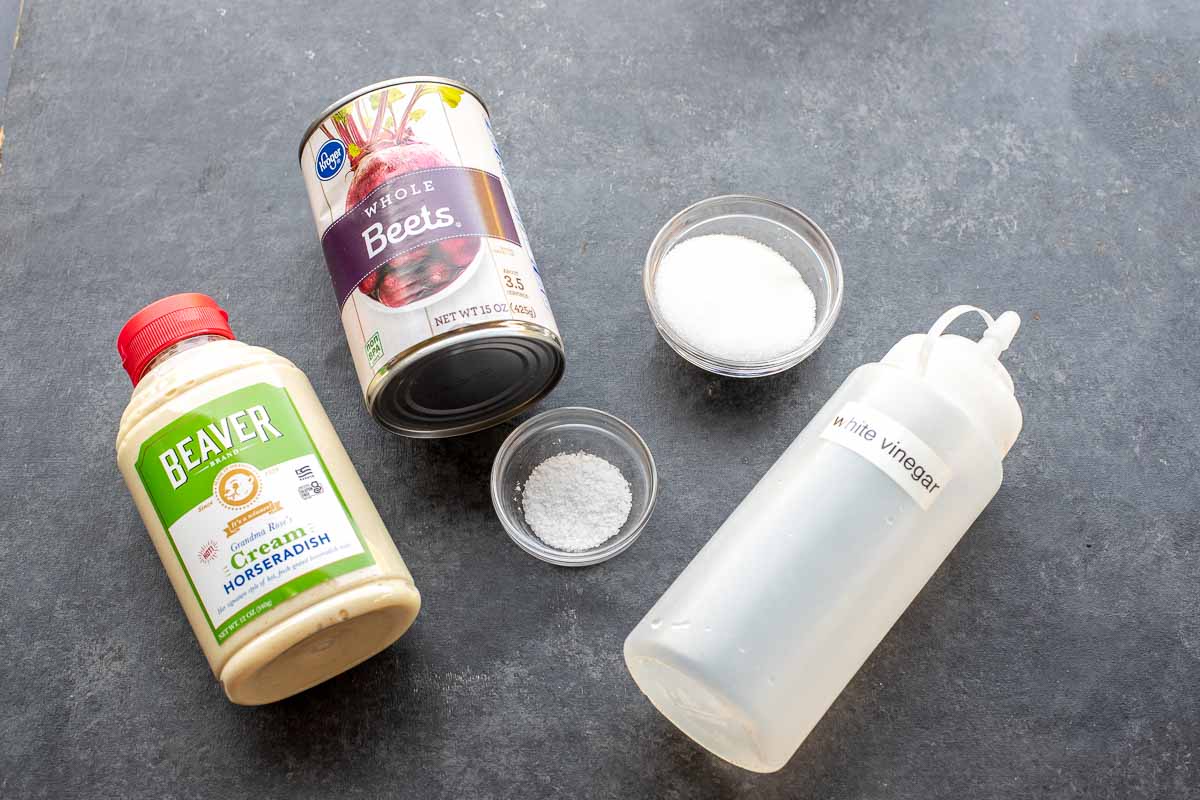
Here’s what’s different:
- Grate the canned beets fine – drain them first, then grate them on the star side of the box grater.
- Press out the juice – canned beets hold a lot of liquid, so press them in a fine-mesh sieve until they stop dripping.
What can I do with the beet juice?
Stir it into borsch or a vinaigrette for extra color. - Keep the seasoning the same – nothing changes there.
- Pick a hot jar – horseradish loses heat the longer the jar sits on the shelf. I use Beaver Hot Cream Horseradish. Last time I used a whole jar and could have added even more.
What to Serve with Beet Horseradish
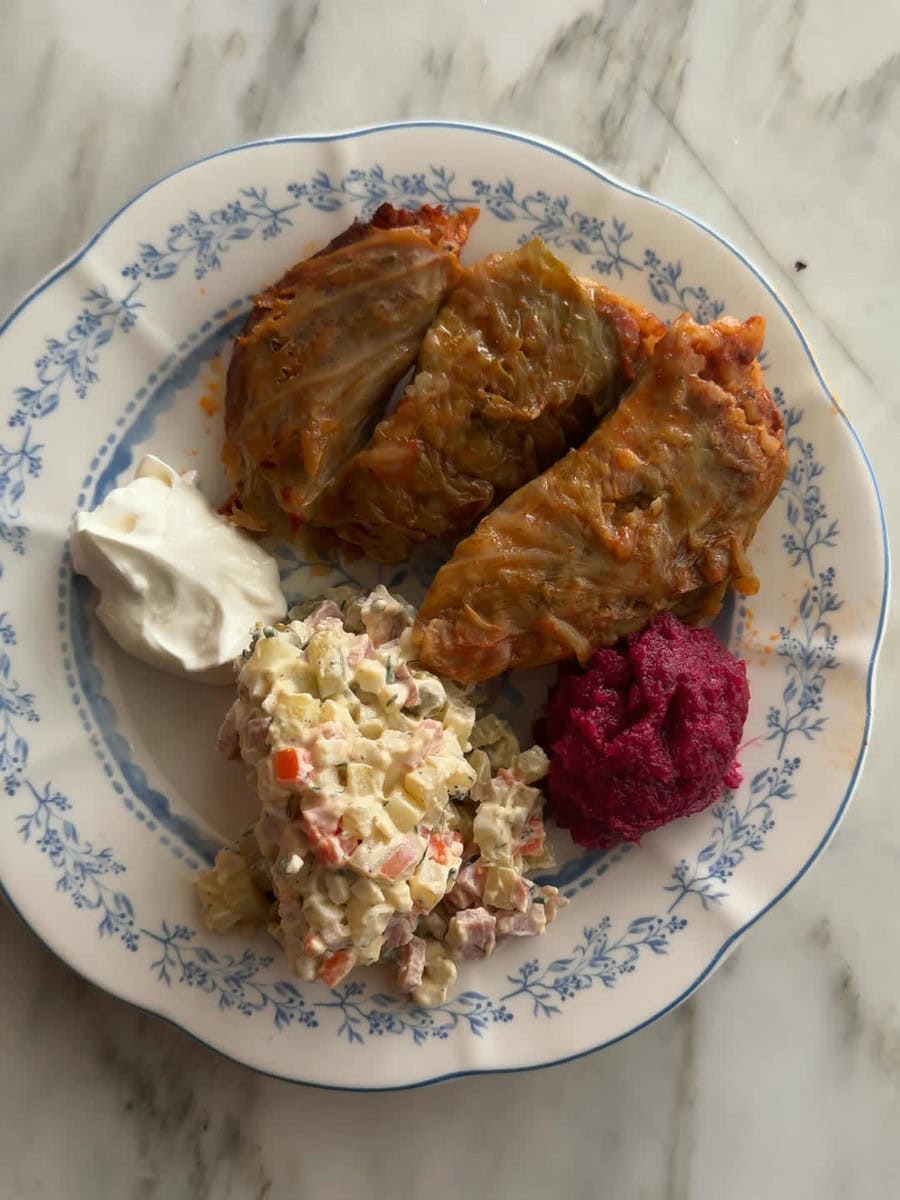
Anything rich. At our house it’s kholodets, cabbage rolls, ham, kovbasa or cold roast beef. This is how we usually eat it: a couple of holubtsi, a spoonful of Olivier salad and a little pile of beet horseradish on the side. It’s also good with potato pancakes, beef stew or a slice of farmer’s bread with butter. Or stir a spoonful into sour cream for a quick sandwich spread.

Chrain for Passover
Chrain comes from the Yiddish word for horseradish. It’s the classic topping for gefilte fish at the Passover seder. It’s great with brisket too.
Make-Ahead Spicy Beet Relish
You can make it a day ahead. A night in the fridge helps the flavors come together. Just know the heat slowly fades as it sits, so for a holiday I make it the day before or that morning.
How to Store Beet Horseradish
Fridge: It keeps up to a month in a sealed jar. The horseradish and vinegar preserve it, as long as nothing but the beets and horseradish touched it while you were making it. So use clean tools and a clean jar, and always a clean spoon when you scoop some out.
Freezer: I don’t freeze it. It loses its kick and the beets get watery.
Pantry: No, keep it in the fridge. It’s not meant for canning.
Beet Horseradish FAQ
Is beet horseradish the same as cwikla?
Yes. Ćwikła is just the Polish name. Ukrainians call it hrin and Jewish families call it chrain, but it’s pretty much the same thing everywhere: beets, horseradish, vinegar, sugar and salt.
Can I grow my own horseradish?
Yes, and it’s so easy. Plant one root (or a few pieces of one) and you’ll get several plants. You don’t even need to water it. The firmer the soil, the thicker the root.
Can I use raw beets?
I always use cooked. Cooked beets are sweet and soft; raw ones taste earthy and stay crunchy.
Can I can beet horseradish?
I don’t. Beets are low in acid and this recipe hasn’t been tested for safe canning, so keep it in the fridge.
Why is my beet horseradish watery?
There was still juice in the beets. Pour off the extra liquid or mix in a bit more grated, squeezed beets.
More Recipes to Serve with Beet Horseradish
Kholodets (Meat Aspic)

The classic holiday aspic – and the first thing I spoon beet horseradish onto. →
Cabbage Rolls

Tender holubtsi in tomato sauce, with sour cream and a spoonful of cwikla on the side. →


Watch Marina Make This Beet Horseradish
Made this recipe?
Please leave a ⭐⭐⭐⭐⭐ star rating and a comment below.
It helps other readers find it, and I love reading every single one.
Beet Horseradish (Cwikla) (Video)
Ingredients
- 2 medium-large beets about 1 lb (460 g); cooked, grated and drained, they make 1 cup (236 g)
- 2-3 oz fresh horseradish root 55-85 g, peeled
- 1/4 cup (60 ml) white vinegar
- 1/4 cup (50 g) granulated sugar
- 2 1/2 tsp (12 ml) kosher salt Morton; use a little less if using table salt
Shortcut swap
- 30 oz (850 g) canned whole beets about 2 cans, drained, in place of the fresh beets; grate and squeeze to 1 cup (Note 3)
- 1/3-1/2 cup prepared horseradish 80-113 g, extra hot, freshly opened, in place of the fresh root
- Box grater star side for the beets
- Fine-mesh sieve
- Food Processor optional, for the horseradish
- Instant Pot optional, for cooking the beets
- Glass jars with lids
Instructions
-
Cook the beets - cook 2 medium-large beets, whole and unpeeled, until a knife slides into the center easily (Note 1).
To roast: wrap each beet in foil and roast at 400°F, 50-60 minutes for medium beets or 1 1/2 to 2 hours for large ones.
To boil: cover the beets with cold water, bring to a boil and simmer, 35-45 minutes for medium beets or 1 to 1 1/2 hours for large ones.
In the Instant Pot: set the beets on the trivet with 1 cup of water and cook on high pressure, at least 45 minutes for large (3-inch) beets, then quick release.
To peel: while the beets are still hot, run them under cold water and the skins slide right off.
Let them cool completely before grating. -
Grate the beets - grate the beets on the star side of a box grater into a bowl. Don’t use a food processor - it turns the beets into liquid.
-
Squeeze out the juice - squeeze the grated beets in cheesecloth or press them in a fine-mesh sieve until they stop dripping. You should have about 1 cup (236 g). This keeps the relish thick instead of watery.
-
Peel and grate the horseradish - peel 2-3 oz fresh horseradish root and grate it on the star side of a box grater, or in a food processor until super fine. The fumes burn your eyes, so open a window. Grate it right after squeezing the beets so it keeps its heat. (Note 2)
-
Add the horseradish - stir in 2-3 oz fresh horseradish root, starting at the low end. Taste and add more a little at a time until it’s a little hotter than you like - it mellows within an hour and even more by the next day.
-
Season - add 2 1/2 tsp kosher salt, 1/4 cup granulated sugar and 1/4 cup white vinegar. Stir until the color is even.
-
Rest and taste - let it sit 5 minutes, then adjust the sugar, salt or horseradish.
-
Chill - spoon it into a clean jar, cover and refrigerate overnight before serving. (Note 4)
Recipe Notes
- Note 1 - Beets: Roasting gives the sweetest, driest beets. Cook them up to 3 days ahead and keep them in the fridge.
- Note 2 - Fresh horseradish: It’s very strong, so grate it by an open window or under the range hood. A freshly dug root is much spicier than one that’s been in the fridge for a month. Make it a bit spicier than you want - it mellows within an hour and even more overnight. Vinegar stops it from getting hotter, so add the vinegar sooner for a milder relish.
- Note 3 - Shortcut: Use the canned beets and extra-hot prepared horseradish from the shortcut list in place of the fresh beets and root. Grate and squeeze the beets the same way, to about 1 cup (236 g). Keep the vinegar, sugar and salt the same. A freshly opened jar is hottest; the longer a jar sits on the shelf, the more heat it loses, so taste and add more.
- Note 4 - Storage: Keeps up to 1 month in the fridge in a sealed jar - the horseradish and vinegar preserve it. Use clean tools so nothing but the beets and horseradish touches it, and serve with a clean spoon. It isn’t tested for canning, and freezing kills the heat.
- Note 5 - The formula: For every 1 cup of grated, squeezed beets: 1/4 cup vinegar, 1/4 cup sugar, 2 1/2 tsp kosher salt and 1/3 to 1/2 cup extra-hot creamed horseradish (or 2-3 oz fresh root). Double it for 2 cups, and so on.

Thank you for following me on Instagram, Facebook & Pinterest!
Hashtag your photos #LetTheBakingBeginBlog so I can see your creations and for a chance to be featured!
Marina | Let the Baking Begin